10/02/2025 .
Notice: This essay constitutes an independent opinion on the origins and views of Joel Skousen. I do NOT speak for him. This is merely a third-party opinion.
Introduction
Joel M. Skousen (born September 22, 1946) is an American survivalist, strategic analyst, author, and political commentator best known as the founder and chief editor of World Affairs Brief, a weekly news‑analysis service. He describes himself as a conservative political scientist by training, with specialties in foreign policy, the philosophy of law, and U.S. constitutional theory. Beyond writing, Skousen consults extensively on the design and construction of high-security residences, retreats, and shelters, integrating self-sufficiency, alternative energy systems, and covert defensive features.
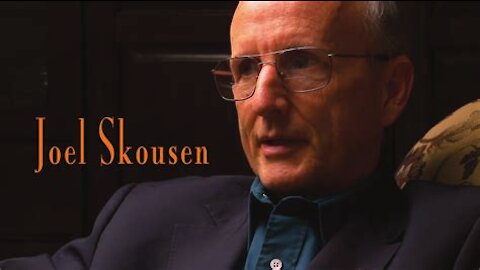
Born in San Diego, California, and raised in Portland, Oregon, Skousen grew up in a family of influential thinkers. His brothers include Royal Skousen, a linguist and scholar, and Mark Skousen, an economist and writer. His uncle, W. Cleon Skousen, was a well-known conservative author and public speaker, often lecturing on conservative political and religious topics. During the Vietnam War era, Joel served as a United States Marine Corps fighter pilot, an experience that informed his later interest in strategic and high‑stakes analysis.
In the 1980s, Skousen entered the leadership of conservative circles, serving as chairman of the Conservative National Committee and executive editor of Conservative Digest. Later, he turned his focus toward survivalism and long‑term geopolitical forecasting. He authored influential works such as Strategic Relocation: A North American Guide to Safe Places, The Secure Home, and How to Implement a High-Security Shelter in the Home, all of which combine practical survival planning with strategic foresight.
Through his publications and weekly World Affairs Brief, Skousen advances the view that global events are driven by the hidden agendas of three major power blocs: Russia, China, and Western globalists. This tri-polar view stands apart from conventional left–right political analysis and provides a structural lens for interpreting global events.
His work blends geopolitical commentary with practical guidance on preparedness, positioning him as a distinctive voice in the intersection of politics and survivalism. His candidacy in the 2024 U.S. presidential cycle under the Constitution Party banner further underscored his public engagement.
How Skousen Recommends Analyzing Current Events
Central to Skousen’s worldview is a method of news analysis that emphasizes skepticism and discernment. He proposes the following interpretive tools:
- Contradictions – Observe the dissonance between official rhetoric and actual policy. Actions reveal true motives.
- Omissions – Attend carefully to what media narratives leave out. Absence often signals deliberate suppression.
- Timing – Always ask ‘Why now?’ Crises, announcements, or wars rarely emerge spontaneously; their timing often benefits specific elites. Nothing in politics is ever an accident. Everything is carefully planned.
- Chessboard View – Abandon binary frames such as democracy vs dictatorship; instead, map power centers competing for influence.
- Cross-Referencing Sources – Compare mainstream, independent, and fringe reporting. Where narratives overlap, truth may lie; where they diverge, spin is revealed.
- Moral Dimensions – Politics cannot be divorced from morality. Corruption, betrayal, and deception have spiritual consequences. One cannot understand any political issues without factoring these variables.
- Preparedness Orientation – Analysis is not an end in itself but a means to prepare for the risks implied by unfolding trends and events.
Together, these tools cultivate a posture of skepticism toward official narratives, promote vigilance against manipulation, and foster a readiness to prepare for impending disruptions. The method is neither passive nor purely intellectual. It seeks to decode the deliberate orchestration of world events, maintain moral clarity in a corrupt world, and equip individuals to act with foresight rather than fear.
Russia, China, and the West
Russia – Skousen contends that the 1991 collapse of the Soviet Union was not genuine but a strategic deception designed to disarm the West. He argues that much of the communist power structure remained intact, including intelligence and military systems. Accordingly, he views Vladimir Putin not as a conservative ally but as a continuation of this authoritarian trajectory.
China – In Skousen’s view, China represents a patient and long-term threat. Rather than relying solely on military force, China advances its agenda through technology transfer, debt diplomacy, and influence operations such as the Belt and Road Initiative. Unlike Russia’s more aggressive military posture, China’s preferred strategy is incremental dominance through economic and institutional leverage.
The Western Globalists – Skousen reserves some of his harshest criticism for Western elites, whom he labels ‘globalists.’ These are not simply liberal politicians but transnational networks of financiers, bureaucrats, and institutional leaders. He identifies two blocs: the U.S./British financial core and a more left-leaning bloc allied with global institutions such as the United Nations. These elites seek to centralize control at the expense of national sovereignty.
Triangular Dynamics – In Skousen’s framework, Russia and China sometimes cooperate tactically against Western powers, but they remain long-term rivals. Meanwhile, Western elites often oscillate between opposing and enabling their adversaries, creating a volatile global environment. The long-term strategies of all superpowers are to thrive on conflict, capitalize on deception, and slowly prepare over many years for the final contest, in which only one will emerge to rule the world.
Future Expectations
Skousen’s forecasts are sobering and rest on several recurring themes:
- Hybrid warfare: An increase in cyber warfare, propaganda, and economic coercion.
- Expansion of surveillance and censorship: Under the guise of safety and security, Western governments will expand digital surveillance and regulate speech.
- Economic shocks: Financial crises or supply chain collapses will be leveraged to consolidate state power.
- Political fragmentation: The weakening of post–World War II alliances will create new instabilities and opportunities for consolidating power.
- Resurgence of authoritarianism: Russia may reassert Soviet-style power, while China continues its ascent.
- Moral reckoning: These geopolitical struggles reflect deeper spiritual conflicts between principle and compromise.
Preparing for the Future
Skousen’s most practical contribution lies in his prescriptions for preparedness. These include:
- Physical Security – Invest in secure homes, shelters, and off-grid systems.
- Strategic Relocation – Move to areas less likely to be targeted or destabilized, such as the Intermountain West.
- Resilience Building – Stockpile food, water, and medical supplies; cultivate practical skills such as gardening and first aid.
- Financial Diversification – Avoid overreliance on fragile institutions; diversify assets.
- Privacy Protection – Limit exposure to digital surveillance and data exploitation.
- Moral Integrity – Hold fast to truth and principle, resisting compromise under pressure.
- Adaptability – Stay alert to early warning signs and be flexible in response.
- Education and Community – Teach others discernment and foster local networks of trust.
For Skousen, preparedness is not merely about survival; it is about preserving freedom and moral independence in the face of systemic collapse.
Conclusion
Joel Skousen offers a framework that blends geopolitical analysis with practical survivalism and moral reflection. His worldview challenges conventional assumptions, urging readers to look beyond official narratives and prepare for an uncertain future. Whether one accepts all of his claims or not, Skousen’s emphasis on vigilance, preparedness, and moral clarity provides a compelling perspective in a time of global upheaval.
References
Ballotpedia. “Joel Skousen.” Available at: https://ballotpedia.org/Joel_Skousen
Greater Light and Truth. (2025a). “Joel Skousen and the World Affairs Brief – How to Analyze the News.” GreaterLightandTruth.com, September 17, 2025.
Greater Light and Truth. (2025b). “Joel Skousen on Russia and Ukraine.” GreaterLightandTruth.com, September 18, 2025.
Independent Political Report. (2024). “IPR Interview: Joel Skousen, Freedom Fest Speaker and POTUS Candidate.” Available at: https://independentpoliticalreport.com
Mark Skousen. “Family and Famous Relatives.” Available at: https://mskousen.com/about/mark-skousens-family-and-famous-relatives
Skousen, Joel. Strategic Relocation: North American Guide to Safe Places. Orem, UT: Joel Skousen Publishing.
Skousen, Joel. The Secure Home. Orem, UT: Joel Skousen Publishing.
Skousen, Joel. World Affairs Brief. Available at: https://worldaffairsbrief.com
Wikipedia. “Joel Skousen.” Available at: https://en.wikipedia.org/wiki/Joel_Skousen
 GREATER LIGHT AND TRUTH
Leave a comment