10/03/2025 .
Introduction
Among the oldest and most insidious strategies of political power is the doctrine of Divide and Conquer (divide et impera). From antiquity to the present, rulers, empires, and elites have recognized that a divided people are easier to govern, easier to exploit, and less likely to unite in resistance. When governments enact destructive policies, pass unjust laws, or engage in corruption to consolidate power and wealth, they inevitably create suffering. To deflect accountability, they manufacture or amplify divisions within society. By setting groups against one another, they ensure that blame falls not on themselves, but on fabricated enemies and rival factions.
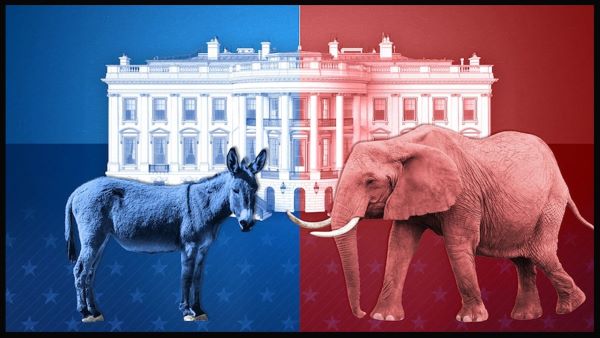
In the modern era, this technique remains central to psychological warfare (psyops). It thrives in the digital age, where narratives spread at lightning speed, emotions are inflamed by media saturation, and trust in institutions is leveraged or destroyed to serve the interests of elites. This essay examines Divide and Conquer as a psychological weapon, exploring its mechanics, operation within the FATE model (Focus, Authority, Tribe, Emotion), and its resonance with the Deep State’s PSYOP Toolkit. It also lists historic and contemporary examples, as well as methods of resistance.
The Mechanics of Divide and Conquer
Divide and Conquer is effective because it works on multiple structural, social, and psychological levels. Governments and elites employ several overlapping techniques:
1. Institutionalizing Social Differences. Social differences (such as religion, ethnicity, class, and language) exist in every society. What makes them politically explosive is when governments codify these differences into law or administrative categories. Once written into bureaucratic structures—such as censuses, legal systems, and official documents—they cease to be flexible social identities and become rigid, state-enforced boundaries. Examples include:
- British India: Colonial authorities created separate electorates for Muslims and Hindus and published census categories that hardened previously fluid identities into official political blocs. This division weakened unified resistance to colonial rule.
- Rwanda: Belgian colonial administrators issued ethnic identity cards distinguishing Hutu from Tutsi. This created artificial, rigid categories that later fueled the 1994 genocide.
- United States (Jim Crow): Laws enforcing racial segregation institutionalized difference by race, ensuring enduring structural inequality while pitting poor whites and Blacks against each other instead of uniting against economic elites.
- India (2019) – Citizenship Amendment Act excluded Muslims from fast-track citizenship, codifying religion into law.
- China – Hukou system enforces rural/urban divide; Uyghurs singled out in databases and surveillance as “security risks.”
- Rwanda – Post-genocide ethnic categories banned publicly but tracked unofficially for prosecutions and control.
- Israel (2018) – Nation-State Law downgraded Arabic and affirmed Israel as the Jewish people’s state, codifying ethno-religious difference.
- United States: No-Fly List & Terror Watchlists (2001–present): Created a bureaucratic “suspect class,” disproportionately Muslim and Arab.
- United States: Real ID Act (2005): Enforced legal status verification, dividing citizens from undocumented residents in access to services.
Note: For the sake of brevity, these examples are only listed, not detailed or described at length. If you ask ChatGPT how these events are examples of Institutionalizing Social Differences as a divide-and-conquer strategy, you’ll get a mountain of information on this. Similarly, subsequent lists of examples in this essay are severely abbreviated for the sake of brevity.
2. Rewarding Collaborators. This often involves granting privileges to a subset of the population—whether elites, minority groups, or military officers—so that they have a vested interest in preserving the system. These collaborators enforce the ruler’s authority while resentment grows among the excluded majority. Examples include:
- Ancient Rome: Provincial elites who cooperated with Rome were rewarded with citizenship, land, and positions of power, ensuring their loyalty to the empire.
- Colonial Africa: European powers often elevated minority groups (e.g., Tutsis in Rwanda, or certain Christian converts in Nigeria) to positions of authority, creating resentment that endured after independence.
- Modern Authoritarian Regimes: Many governments selectively reward loyalists with contracts, subsidies, or military promotions, creating a patronage class that defends the regime even against popular uprisings.
- Wall Street Bailouts: Big banks rescued while millions lost homes and jobs.
- Defense Contractors: Firms like Halliburton, Blackwater, and Lockheed enriched by endless wars.
- Pharma & Healthcare Giants: Liability shields, subsidies, and profits while citizens face soaring costs and suicidal medical advice and treatments.
- Big Tech & Surveillance: Companies partnered with intelligence agencies, gaining contracts while privacy is eroded.
- Police Unions & Qualified Immunity: Law enforcement officers and SWAT Teams are protected from accountability, loyalty secured through legal privilege, and ordinary citizens denied basic rights of self-defense.
- Political Donors/Lobbyists: Citizens United ruling rewarded wealthy donors with disproportionate influence. The Israel Lobby owns most members of Congress and controls the White House. The pro-Israel movement is fueled by rhetoric from establishment sources, while any criticism of Israel is labeled as Anti-Semitism, creating a national pro-Israel cult.
- COVID-Era Corporate Privilege: Amazon, Walmart, and others were allowed to operate while small businesses were shuttered.
- Elite Universities: Massive federal grants and loan subsidies enriched institutions while students carried crushing debt.
3. Scapegoating and Distraction. When policy failures lead to economic crises, corruption scandals, or social unrest, rulers often avoid accountability by scapegoating a vulnerable group. This tactic distracts citizens from the structural or systemic causes of suffering, channeling frustration into intergroup hostility. Examples include:
- Nazi Germany: The regime blamed Jews, communists, and other minorities for economic collapse and wartime hardship, deflecting anger from failed policies.
- United States:
- Muslims & Arabs after 9/11 (2001–present): Blamed for terrorism, distracting from intelligence and foreign policy failures. Muslims and Arabs were blamed for the 9/11 false flag attacks perpetrated by the Deep State.
- Immigrants: In periods of economic stress, immigrants have often been scapegoated as “job stealers,” while the US Administration deliberately opened the borders, created massive incentives for illegal immigration, and accommodated illegal immigration in partnership with the UN.
- Black communities & crime: Used as scapegoats for urban decay instead of addressing systemic poverty, policy failures, government embezzlement of funds allocated to reduce poverty, and legislation that makes matters worse.
- COVID scapegoats (2020–2022): The unvaccinated were targeted as making matters worse, while blaming China for creating the pandemic emergency, as a ploy to conceal government lies and mismanagement.
4. Controlling the Narrative. Control over media and communication allows elites to create a singular interpretation of events, suppressing dissent and delegitimizing alternative viewpoints. Repetition, censorship, and propaganda normalize the “official” version of reality while marginalizing competing voices. Examples include:
- Deep State Controlled Main-stream Media Outlets: State-controlled press and education promoted a single ideological narrative, labeling dissenters as enemies of the people.
- Modern Social Media: Algorithms amplify the official government narratives and suppress competing narratives that might undermine the official narratives.
5. Exploiting Wedge Issues. Leaders deliberately highlight issues that fracture potential coalitions. These wedge issues need not be central to governance; their power lies in their ability to inflame passions and redirect political energy away from systemic concerns. Examples include:
- Colonial Tactics: The British often exploited religious divides in India and the Middle East, ensuring Muslims and Hindus—or Sunnis and Shias—remained in conflict rather than united against colonial rule.
- U.S. Civil Rights Era: Segregationists used racial fears to divide working-class whites and Blacks, preventing solidarity around shared labor and economic issues.
- Modern Culture Wars: Debates over systemic racism, minority inequalities, gender identity, or immigration often overshadow broader economic issues or underlying ideological issues, serving as tools to pit Americans against one another.
6. Harnessing Fear and Emotion. Fear, outrage, and pity bypass rational analysis. When emotions dominate, people cling to their tribe, resist compromise, and accept authoritarian measures as protective necessities. Fear not only divides—it immobilizes reason. Examples include:
- Cold War: Both the U.S. and USSR stoked fear of the other to justify militarization and suppress dissent at home.
- Rwanda 1994: Propaganda radio broadcasts fueled fear of Tutsis as “cockroaches,” making violence appear like self-defense to ordinary citizens.
- Pandemic Politics: Fear of disease, outrage at government mandates, and pity for victims polarized societies worldwide, often more along partisan lines than scientific ones.
False Flag Operations
False flag operations are deliberate acts of violence designed to appear as though they were carried out by another party. They function as one of the most potent forms of Divide and Conquer because they simultaneously create scapegoats, justify repressive measures, and consolidate loyalty to ruling powers.
False flag events provide an immediate ‘enemy’ for the public to blame, often an out-group, a political rival, or another country that the ruling class wants to go to war with. False flag events are relatively easy to plan, execute, and control the narrative afterwards. As such, it is easy for governments to use false flag events to justify crackdowns, wars, or the exercise of emergency powers that diminish or violate fundamental rights. This is because such events are designed to elicit a strong emotional response, namely shock, fear, and outrage, that ensures tribal loyalty and silences dissent. Examples include:
- Reichstag Fire (1933): Used by Nazis to blame communists and consolidate power.
- Mukden Incident (1931): The Japanese staged an explosion blamed on China.
- Modern Events: The attack on 9/11, lone gunman mass shootings, and the COVID-19 Pandemic were all staged events, planned and orchestrated in ways to increase government power, increase surveillance, diminish fundamental rights, and pave the way to the New World Order global government.
- Modern Dynamics: In the digital era, cyberattacks, shootings, and terror events can be immediately attributed to rivals or scapegoats before facts are clear. These narratives fracture populations, pit groups against each other, and align public opinion behind elite agendas.
Divide and Conquer and the FATE Model
The FATE model—Focus, Authority, Tribe, Emotion—provides a framework for understanding psychological operations (psyops). Accordingly, the Divide and Conquer doctrine exploits each dimension:
- Focus: Media saturation ensures the public’s attention remains fixed on specific issues, scandals, or enemy groups.
- Authority: Trusted voices are recruited to legitimize the division.
- Tribe: Identity categories are hardened into moral battle lines.
- Emotion: Fear, outrage, and pity override critical thinking.
Divide and Conquer in the Deep State’s PsyOp Toolkit
In The Deep State’s PsyOp Toolkit, several manipulative strategies make Divide and Conquer work:
- Straw Man & Ad Hominem: Opponents are reduced to caricatures.
- False Dilemma: Issues are presented as binary choices.
- Appeal to Emotion: Fear and outrage replace reasoned debate.
- Prestige and Repetition: Authorities repeat divisive narratives until they take on a sacred quality.
- Crowd Convictions as Religion: Once an issue is sacred, dissent is heresy.
Recognizing Divide and Conquer
- Narrow Focus on One Villain or Grievance: When blame is centered on a single enemy, systemic causes are ignored. Examples: Jews in Nazi Germany; obsessive media focus on individuals today.
- Authorities Repeating Identical Talking Points: Echoed slogans create false consensus. Examples: ‘Weapons of mass destruction’ in Iraq; repeated pandemic slogans.
- Binary Framing That Leaves No Room for Nuance: False dilemmas force tribal choices. Examples: Cold War binaries; all-or-nothing stances on immigration or climate.
- Identity-Based Loyalty Demands: Loyalty tests replace evidence with allegiance. Examples: McCarthy-era oaths; modern culture war allegiance tests.
- Emotional Escalation Demanding Immediate Action: Urgency bypasses rational scrutiny. Examples: 9/11 justifying the Patriot Act; outraged mobs demanding instant punishment.
- Clear Beneficiaries When Division Intensifies: Elites profit when groups fight. Examples: colonial rulers benefitting from rivalries; corporations advancing agendas amid culture wars; big tech companies that make billions after false flag events.
- Suppression of Context or Counter-Evidence: Alternative data silenced to preserve the narrative. Examples: Suppression of 9/11 Truth organizations, COVID-19 questioners being silenced.
Resistance Strategies
Combating Divide and Conquer strategies requires conscious action:
- Question the narrative. Explore and verify everything before reacting. Don’t just accept the establishment narrative. Do your own research. Get the facts and analyze the data.
- Avoid getting emotional about political issues and events. Emotion clouds judgment and increases the likelihood of jumping to erroneous, suggested conclusions. Maintain your composure and ability to think rationally and methodically.
- Expose incentives by tracing who benefits. What seems like a plausible narrative or good idea often proves otherwise once one considers long-term effects, compromised principles, and hidden beneficiaries.
- Support organizations and leaders that are honest and courageous in addressing all the facts by asking questions that really probe the issues, incentives, and outcomes.
- Always question the establishment narrative. It’s almost always deeply dishonest and manipulative.
- Help and support efforts that encourage an educated and rational electorate. These might include membership or affiliation with organizations like The John Birch Society or Turning Point USA.
Conclusion
Divide and Conquer is as old as empire and as current as today’s headlines. It manipulates attention, authority, identity, and emotion to cloak systemic corruption and empower the leaders of secret societies. From Roman provinces to India’s partitions, from Rwanda’s identity cards to America’s culture wars, the method repeats. Education and recognition is just the beginning of resistance. By exposing the mechanics of this ancient weapon and deliberately resisting its pull, people can reclaim their fundamental rights, disenfranchise corrupt governments, and institutionalize effective governance worldwide.
References
1. Ando, Clifford. Imperial Ideology and Provincial Loyalty in the Roman Empire. University of California Press, 2000.
2. Masters, Bruce. Christians and Jews in the Ottoman Arab World: The Roots of Sectarianism. Cambridge University Press, 2001.
3. Chatterjee, Partha. The Nation and Its Fragments: Colonial and Postcolonial Histories. Princeton University Press, 1993.
4. Mamdani, Mahmood. When Victims Become Killers: Colonialism, Nativism, and the Genocide in Rwanda. Princeton University Press, 2001.
5. Kruse, Kevin M. White Flight: Atlanta and the Making of Modern Conservatism. Princeton University Press, 2005.
6. Eastley, Jared. “PsyOp Recognition and Resistance.” Greater Light and Truth, September 19, 2025.
7. Eastley, Jared. “The Deep State’s PsyOp Toolkit.” Greater Light and Truth, September 25, 2025.
8. Le Bon, Gustave. The Crowd: A Study of the Popular Mind. 1895.
 GREATER LIGHT AND TRUTH
Leave a comment