10/06/2025 .
The term “Strategy of Tension” refers to a deliberate tactic of fostering social, political, or ideological conflict to keep populations divided, fearful, and therefore more easily controlled. It is rooted in a simple but powerful insight: people who feel threatened and isolated will turn against one another, while people who feel connected within a cohesive community will begin to resist those who manipulate them.
When individuals or groups from different backgrounds actually converse, they often discover shared grievances, similar aspirations, and a common sense of dignity and community pride. This creates esprit de corps—mutual trust, solidarity, and a collective willingness to cooperate for mutual benefit. For any ruling elite or manipulative faction, such solidarity is dangerous because it erodes the effectiveness of top-down control. Thus, the Strategy of Tension is employed to prevent dialogue, exacerbate divisions, and foster distrust.
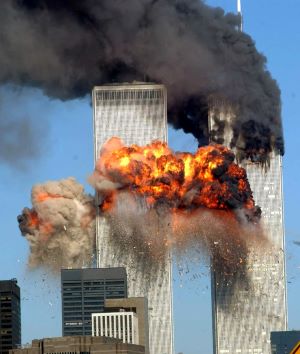
Core Principles of the Strategy
1. Divide and Rule – By emphasizing differences (race, religion, class, party affiliation, gender, etc.), the controllers ensure that ordinary citizens view one another with suspicion rather than unity.
2. Perpetual Crisis and Fear – Fearful people are easier to manipulate. A constant sense of crisis—whether from terrorism, pandemics, economic collapse, or “foreign interference”—keeps populations anxious and looking to authority for protection rather than trusting one another.
3. Provocation and False Flag Events – Historically, the Strategy of Tension has included covert provocations—events staged or exaggerated to inflame tensions. These operations produce predictable emotional reactions and provide justification for harsher controls.
4. Censorship and Narrative Control – The same elites who sow division also restrict independent narratives. If opposing groups could compare notes and see the bigger picture, the manipulation would collapse.
The Strategy of Tension as a Psychological Operation (PSYOP)
A Psychological Operation (PSYOP) is any coordinated activity intended to manipulate the emotions, beliefs, and behavior of a target audience. PSYOPs are not only military tools—they are also used in politics, religions, corporate activities, and social engineering.
Within this context, the Strategy of Tension functions as an overarching framework:
– Target Identification – Divide the public into multiple opposing factions. (race, religion, politics, language, etc.)
– Narrative Engineering – Feed each faction tailored information calculated to inflame fears and grievances.
– Trigger Events – Use incidents—real or manufactured—to amplify outrage.
– Sustained Manipulation – Keep both sides in a state of outrage and paranoia.
– Offer the “Solution” – After enough tension, the public demands centralized control and increased “emergency powers”—precisely the goal of the operation.
Why Conversation Is Dangerous to Controllers
When people talk across artificial barriers, they realize they share the same frustrations and are victims of the same system. This awakening breaks the PSYOP cycle. It undermines the divide-and-rule mechanism and produces cooperation and mutual aid.
Contemporary Applications
Modern psychological operations use social media algorithms, selective censorship, and culture-war narratives to maintain division. Rather than overt state terror, today’s tactics are digital and narrative-based. Yet the underlying principle remains: keep people from uniting and you can keep them compliant.
Key Takeaway
The Strategy of Tension is a deliberate technique of Psychological Operation and social engineering. Its goal is to keep populations fragmented and suspicious so that they cannot form networks of resistance or mutual support. Breaking this cycle requires open dialogue, independent media, independent thinking, and emotional self-control to resist provocation.
Why this is relevant…
Charlie Kirk was assassinated because he was undermining the Deep State’s Strategy of Tension operations. He was facilitating open dialogue and civil discussion across political, religious, racial, and socio-economic lines. And he was beginning to offer various counter-narratives that undermined the state-sponsored narratives being fed to the public through multiple outlets.
 GREATER LIGHT AND TRUTH
Leave a comment