10/08/2025 .
Part I: The Everywhere War — An Insurrection Against the Constitution
When a government reserves the authority to declare anyone an enemy at will, it places every citizen under silent suspicion. Liberty ceases to be a right and becomes a temporary privilege, one that can be revoked the moment it becomes inconvenient to those in power. What was once considered a remote danger, or a hypothetical possibility, has now become a living reality within our own borders.
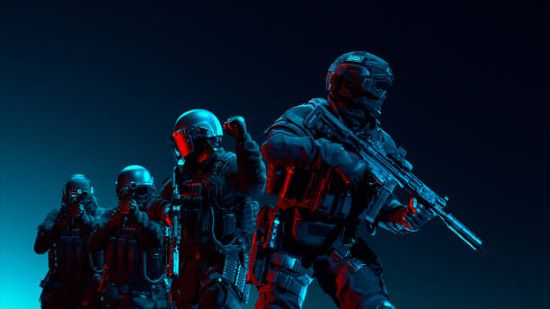
In recent years, we have watched the American government extend its military reach across the globe, all while turning its domestic agencies into armed enforcers at home. The same state that boasts of sinking foreign vessels in the name of “security” now sends tactical teams into American neighborhoods, deploying helicopters over apartment complexes and dragging men, women, and children from their homes as though they were insurgents in a war zone.
The justification is always the same: public safety, national security, defending democracy, stability, and order. But the message is unmistakable: the government now views its own people through the lens of warfare. The battlefield has expanded from distant lands to our very doorsteps. The distinction between foreign combatants and domestic citizens grows thinner by the day.
This transformation rests on a dangerous linguistic sleight of hand. Redefine a police operation as a “counterterrorism mission,” and citizens become “suspects,” and potentially even “enemy combatants.” Redefine the homeland as a “security theater,” and constitutional rights become “privileges subject to review.” Words are not harmless — they are the instruments by which power reshapes reality. And through such language, war has become the government’s default setting, its justification for every expansion of force.
The real threat lies not in the raids themselves but in the precedent they set — the normalization of a permanent war posture, unbound by geography, law, or restraint. Each executive order, each “emergency authorization,” each unchecked agency operation chips away at the constitutional architecture designed to prevent precisely this kind of power consolidation. The result is a state that operates not as servant of the people, but as master over them — a state that now points its weapons inward.
The Founders understood human nature. They knew that power expands if not constrained, that fear is the most effective tool of control, and that even good men become dangerous when unaccountable. The constitutional boundaries they built were not to slow progress, but to preserve freedom. And yet, with each new “security threat,” those boundaries are eroded a little more.
We have entered an era where “war” no longer means a declared conflict between nations, but a permanent condition — a state of justification for government overreach. The battlefield is not a foreign shore; it is now everywhere. Every digital network, every city street, every citizen can be classified as part of this amorphous “war on threats.”
Once the machinery of war has been set in motion, it rarely powers down. It simply recalibrates its targets. And when a government’s weapons, laws, and surveillance networks no longer distinguish between foreign enemies and domestic dissent, the republic ceases to function as a free society. It begins to function as a security apparatus.
If liberty is to survive this era of perpetual warfare, it will require courage — not the kind displayed on battlefields, but the quiet courage of citizens who refuse to yield their freedoms to fear. The courage to demand due process, to question authority, and to say “no” when the state tells us that safety requires submission and the relinquishing of our most cherished rights.
Part II: The Department of War for the Everywhere War
The recent decision to rebrand the Department of Defense as the “Department of War” is not a mere cosmetic shift. It is a linguistic and symbolic signal that changes the orientation of the state’s posture. While the name “Defense” connotes restraint, protection, deterrence, and boundaries, the name “War” speaks of offense, permanence, aggression, and a normalization of combat. By reimposing the term “war” at the center of the national military apparatus, the administration is declaring that we no longer merely guard ourselves — we wage war. That reorientation dovetails dangerously with the “everywhere war” mindset: if the Department of War is perpetually engaged, every conflict, internal or external, is presumed valid.
This change in nomenclature is also a functional inversion of priorities. When the governing body is named “Defense,” its default role is reaction, preserving what is given. When it is named “War,” its default is action, expansion, and assault. The executive branch thus signals that preeminence belongs to force, not law; to attack, not restraint. In a system where war becomes the presumption, constitutional limits and civil protections recede into afterthoughts — secondary to the demands of combat. The semantic recoding helps justify militarized actions at home: raids, surveillance, separations. Under the banner of “war,” citizens are redefined as enemies, and domestic space becomes a legitimate field of operations.
Moreover, the renaming underscores the ideological shift at the heart of the assault on constitutional order. Words matter. When a government calls itself a “war department,” it invites the public to accept that life has entered a state of perpetual conflict. It primes the citizenry to see dissent, protest, and civil resistance not as political speech, but as acts of hostility. The shift strengthens the rhetorical bridge between external war (bombing Venezuelan vessels, targeting cartels) and internal war (raids against American homes). The same logic that justifies lethal military operations abroad is now being repurposed to justify militarized policing — because the entire internal realm is being reframed as hostile territory.
This redefinition also accelerates mission creep. Once war becomes the department’s identity, all operations — foreign or domestic — can be folded under that umbrella. The bureaucratic architecture will follow suit: rules, funding, agencies, personnel, and authority will all recalibrate toward “war operations” rather than defense or civil governance. The distinction between foreign threats and internal governance continues to erode even further. What once required oversight, accountability, and judicial restraint becomes recast as a combat necessity, subject to fewer checks, fewer constraints, and fewer requirements for transparency.
In short, renaming the Department of Defense the “Department of War” is no symbolic quirk. It is a bold act of reorientation — a framing move so powerful that it shifts the paradigm in massive ways. It reinforces the logic that the state is at war everywhere, that any target can be a combatant, that any zone can be a battleground. It provides the executive with a rhetorical, institutional, and psychological lever that enables it to subsume civil society under the dominance of martial law.
Part III: Jefferson’s Warning — The War on Liberty
Thomas Jefferson foresaw precisely this evolution of power. He understood that liberty does not vanish suddenly; it is eroded through a series of “necessary” measures — each one rationalized, each one clothed in good intentions.
“The natural progress of things,” Jefferson warned, “is for liberty to yield and government to gain ground.”¹
This was not cynicism; it was the sober recognition of human behavior. Jefferson knew that once fear enters the equation, the people will willingly trade freedom for the illusion of safety. They will consent to their own surveillance, justify their own subjugation, and call it “security.”
If Jefferson were here to witness this generation’s normalization of militarized policing, he would not be surprised. He would simply note that we have repeated the same ancient mistake: we have allowed fear to override principle.
He would see what I see — that when a government begins to treat its own people as combatants, it has ceased to be a republic in spirit, even if it retains the name. When the executive branch can classify an idea, a protest, or a private citizen as a “threat,” and then act unilaterally against them, the line between lawful authority and tyranny has already been crossed.
Jefferson’s writings reveal a deep trust in local sovereignty, individual conscience, and decentralized power. He believed that true freedom can only be preserved when the states, communities, and individuals remain strong enough to check the ambitions of the central government.
“When all government, domestic and foreign, in little as in great things, shall be drawn to Washington as the center of all power,” he warned, “it will render powerless the checks provided by the States, and bring about the very tyranny we separated to avoid.”²
This is not merely a matter of political theory; it is prophetic. We are witnessing precisely what he described: the centralization of all authority, all surveillance, and all force into a single national command structure, unchecked by the states and unaccountable to the people.
Jefferson would remind us that the Constitution was not written to empower government, but to restrain it. The Bill of Rights was not a list of privileges granted by the state; it was a declaration of boundaries the state may never cross. And yet, we now live in a climate where these boundaries are routinely crossed, excused, or ignored — often under the justification of “national security.”
The republic does not end with a coup; it ends when the people no longer demand liberty. It ends when they adapt to surveillance as normal, when they rationalize censorship as “protection,” and when they cease to resist the expansion of authority because it feels too dangerous or too futile to do so.
“Eternal vigilance,” Jefferson wrote, “is the price of liberty.”³
Vigilance is not outrage. It is not violence. It is disciplined awareness. It is the intellectual and moral commitment to defend truth and freedom against all encroachments, foreign or domestic.
Freedom is not lost in one generation because an enemy conquers us. It is lost because we forget the principles that made us free.
References
1. Thomas Jefferson to Edward Carrington, Paris, May 27, 1788.
2. Thomas Jefferson to Charles Hammond, August 18, 1821.
3. Attributed to Thomas Jefferson, though paraphrased from various writings emphasizing vigilance and liberty.
This essay was inspired by John Whitehead’s essay: Trump’s Everywhere War: An Insurrection Against the Constitution.
 GREATER LIGHT AND TRUTH
Leave a comment