11/6/2025
Prologue: The Primitive Christian Church in Review
In the Primitive Christian Church, the early believers began with a genuine dispensation of the gospel as established by Jesus Christ and his ordained apostles. Their doctrine was simple, potent, and transformative: faith in Christ, repentance, baptism by immersion in water, and reception of the Holy Ghost, as taught by the Savior. These principles were established as the true doctrine of Christ, efficacious in redeeming all people from sin to holiness. But within three centuries of its founding, the once-pure gospel was diluted by philosophy, politicized by empire, and institutionalized by Rome. The original message was buried beneath layers of ritualism, clerical authority, and pagan adaptation. When the Roman Empire rebranded itself as a “Church,” the moral and spiritual power of the gospel was lost; the form partially remained, but the fire was gone. Thus, ended authentic Christianity.
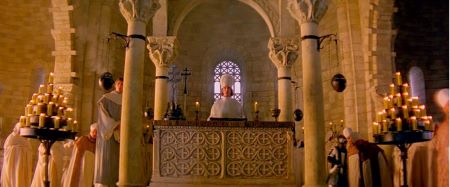
Saved by Grace—Debunked, Part III examines how Catholicism transformed grace into a sacramental economy—a system of rites and permissions managed by clergy—and how modern Mormonism, despite its inspired beginnings, repeated the same pattern by redefining grace as conditional upon institutional worthiness and obedience to men. It will show that in both systems, divine mercy was bureaucratized, repentance was ritualized, and faith was domesticated into submission to hierarchy rather than submission to God.
The purpose of Part III is not to judge or condemn individuals of either faith but to expose the systemic mechanisms by which the authentic church of Christ tends to degenerate into systems of theology that depart from the pure doctrine of Christ, leading men and women away from the path of truth and righteousness.
Recognizing Sincerity Amid Institutional Error
Before launching into Part III, it must be said in fairness that within both Catholicism and modern Mormonism dwell many earnest and honorable souls who genuinely seek to love and serve God. Not all Catholics or Latter-day Saints are blind followers of creeds or hierarchies. Among them are humble men and women who pray sincerely, serve their neighbors, and labor to keep the commandments as best they understand them. Their devotion is often deep, their charity real, and their sacrifices heartfelt.
The problem is not that these believers are insincere, but that the systems and cultures enveloping them have inherited flawed assumptions about grace, authority, and salvation. Many within these traditions yearn for holiness, yet are taught that divine favor flows primarily through institutional channels—through sacraments, ordinances, or hierarchical endorsement—rather than directly from Christ through faith and repentance. This misplacement of faith does not erase their goodness; it simply misdirects it, and in almost all cases, prevents them from receiving the most lofty blessings they seek or that are available to the faithful.
Both Catholicism and Mormonism contain bright remnants of truth. The Catholic tradition, for all its ritualism, still preserves reverence for holiness, continuity of worship, and respect for moral discipline. The Latter-day Saint tradition, for all its bureaucracy, still emphasizes family devotion, personal morality, and industrious living. These are noble fruits that testify of divine influence. Yet even noble fruits cannot justify the root error of substituting hierarchy for holiness or institution for true intimacy with Christ.
The point, then, is not to condemn the faithful who live within these structures, but to illuminate the difference between devotion to Christ and dependence on men. Wherever believers humble themselves, repent sincerely, and follow the promptings of the Spirit, they step outside the bondage of institutional religion and into the freedom and enabling power of divine grace. And wherever grace awakens repentance and obedience rather than passive conformity, there the true Church of Christ quietly flourishes—regardless of denomination or name.
The Institutionalization of Grace in Ancient Catholicism
Every great apostasy in Christian history has begun by exchanging the simple faith taught by Jesus and His apostles for an updated, newer, mechanical, philosophically sophisticated, institutionalized religion. And though apostasy can rarely be focused on a single event or date, it can usually be identified by definable institutional beginnings.
The formal institution of the Catholic Church took shape during the 4th century AD, especially between AD 313 and AD 380, when Christianity transitioned from a persecuted faith to the official religion of the Roman Empire. The Emperor Constantine did this in an effort to unify his empire with the adoption of a new theology. And so, this new theology had to be redefined, blended with the beliefs and philosophies held dear by most Gentile Romans, institutionalized, and enforced by the sword.
The Edict of Thessalonica in AD 380 (also called Cunctos Populos) is often viewed by historians as the birth certificate of the institutional Catholic Church. It stated: “It is Our Will that all the peoples… shall hold that faith which was delivered to the Romans by the divine Apostle Peter… and which the pontiff Damasus [of Rome] and Peter, bishop of Alexandria, follow… We authorize the followers of this law to assume the title of Catholic Christians.”
This imperial decree:
- Made Catholic (Nicene) Christianity the only legal religion in the empire.
- Officially recognized the authority of the Bishop of Rome (the Pope) as the supreme leader of the faith.
- Unified doctrine, hierarchy, and political structure, creating a centralized, institutional Church.
After AD 380, the Roman government funded church buildings, paid clergy salaries, and enforced orthodoxy.
The Church, in turn, adopted Roman administrative systems — dioceses, titles, and canon law — becoming an empire-wide institution rather than a network of local congregations.
The institutionalization of the Catholic Church in AD 380 wasn’t merely a political event; it fundamentally reshaped Christian theology, particularly doctrines such as grace, salvation, and authority—not to mention a complete redefinition of God’s divine nature as the Trinity.
Before AD 313, and certainly during the ministry of the originally ordained apostles, Christianity was a grassroots, persecuted movement. Faith was personal, moral, and transformative, and was focused on repentance, sanctification, and discipleship under Christ.
After legalization in AD 313 and official establishment in AD 380, Christianity became entangled with imperial power. The Church now needed: Uniformity (to avoid religious division across the empire), Authority (to decide what was orthodox or heretical), and Stability (to serve the political goals of unity under one faith). The result was that Christianity turned from a fellowship of believers into a regulated institution. And so, doctrines like grace, once described in relational, spiritual, and moral terms, were redefined in institutional, sacramental, and juridical terms.
When Emperor Theodosius I made Nicene Christianity the state religion in AD 380, the Roman government and bishops had to define: Who is a true Christian? What must one do to be saved? And who has the authority to say so?
This created the conditions for grace to be systematized and regulated. And so, to maintain order, salvation had to be observable, trackable, and enforceable, not just in terms of internal repentance or faith, but in order to regulate participation in Church-administered rites and activities. Hence arose the concept of “sacramental grace” as divine favor conferred through the authorized performance of specific rituals.
And so, in this way, grace moved from being God’s personal power and influence that transforms the repentant soul into a true disciple of Christ to being a divine benefit distributed through the Church’s authorized sacramental system.
Shortly after AD 380, Augustine of Hippo (AD 354–430) emerged as the dominant theologian of the era. He systematized the Church’s teaching on grace and sin in a way that aligned perfectly with the new institutional order.
Specifically, Augustine taught that grace is necessary for every act of faith and salvation, but that it is mediated exclusively through the Church, especially through baptism and the Eucharist. He also taught that those outside the visible Church could not ordinarily receive saving grace. And then finally, his famous phrase “Extra ecclesiam nulla salus” — “Outside the Church there is no salvation” — became the institutional cornerstone of Catholic grace theology. Thus, salvation and grace were no longer purely personal spiritual realities between the believer and Christ; they became juridical realities administered through ecclesiastical authority.
And so, when the early Catholic Church became institutionalized, it replaced the original doctrine of grace with ceremonies, creeds, and hierarchies that promised salvation through belonging rather than becoming. Then, when the Reformation attempted to correct the evils imposed by historical Catholicism by protesting the legalism of Rome, it managed to erroneously preserve the same logic by substituting verbal confession for ritual confession. Likewise, as modern LDS Mormonism emerged in the early 1900s, it kept many outward forms of the old covenants, yet it again managed to repeat the same errors by turning ordinances into the new “works of the law.”
Both Catholicism and Mormonism, in their popular practice, proclaim Christ while teaching that His grace is mediated primarily through institutional sacraments and ordinances. In so doing, they have exchanged the living covenant of obedience for a system of ritual performance. Thus, what began as symbols of inner transformation have been enthroned as substitutes for it.
Catholicism: The Sacramental Economy of Grace
The Roman church teaches that grace is dispensed through seven sacraments administered by priestly authority: baptism, confirmation, Eucharist, penance, anointing, holy orders, and matrimony. In theory, these sacraments point the believer to Christ; in practice, they too often become the very currency of salvation—tokens to be collected, not truths to be lived.
The Catechism calls the sacraments “necessary for salvation.” This necessity implies that outside the visible church and its rites, there is no ordinary means of grace. Thus, faith becomes institutionally dependent. Righteousness is outsourced to a clerical order; forgiveness is managed through confessionals; and repentance is replaced by ritual absolution.
But Jesus did not delegate His grace to a bureaucracy. He said, “The kingdom of God is within you.” Grace is not a liquid that priestly hands must pour; it is the living light of truth that enters any mind and heart willing to forsake sin and obey God. When Peter wrote of the “royal priesthood,” he declared that all true believers, purified by obedience to the truth, become priests unto God, not by ordination, but by sanctification.
Thus, while Catholic tradition preserves reverence, continuity, and moral seriousness, it also perpetuates the fallacy that holiness can be transmitted externally and mechanically. The confessional may soothe guilt, but without the crucifixion of the carnal self, it produces no new creature characteristic of the divine nature of Christ. Penance, indulgence, and rosary may remind the soul of duty, but only repentance that improves character and changes behavior fulfills the commandment to “Go, and sin no more.”
The Rise of Modern Mormonism
More than a millennium later, in 1820, the heavens opened again. Joseph Smith, a young seeker of truth, was called of God to restore the original doctrine of Christ, not to invent a new religion, but to revive the original. Through divine revelation and translation, he brought forth the Book of Mormon, a second witness of Jesus Christ, which restored clarity to the doctrine of faith, repentance, baptism, and the gift of the Holy Ghost. This was not institutional Christianity re-packaged, but the authentic gospel revived in power.
For a brief and wonderful moment, the Restoration movement returned Christianity to its original living roots. The pure doctrine of Christ was again taught, priesthood authority was re-conferred, essential ordinances were re-established, and the early Saints rejoiced in direct revelation. Yet almost as soon as the fire was lit, the same pattern that overtook ancient Christianity began again. The movement that began with a true prophet and an authentic example of Christlike faith soon morphed into hierarchical authority and institutional conformity.
Following the martyrdom of Joseph Smith in 1844, a profound transformation overtook the fledgling Church. Brigham Young and the new Quorum of the Twelve replaced prophetic revelation with administrative power. Under their leadership, the movement became a rigid system of hierarchy and control. The emphasis shifted from spiritual rebirth to outward performance, from the faith and repentance that sanctify the soul to the ordinances and obedience to hierarchy that signal belonging.
The doctrine of Christ as taught in the Book of Mormon was quietly displaced by an institutional religion centered upon temple worthiness, priesthood loyalty, and submission to leadership. Polygamy, the rallying banner of Brigham’s administration, became the public proof of obedience; ordinances multiplied; and unquestioning allegiance to “the brethren” became the highest expression of faith. Beginning with the assassination of Joseph Smith and the subsequent consolidation of power under Brigham Young marked the beginning of a second, modern apostasy: the replacement of the living gospel with the machinery of religion.
Replacing Grace with Ordinances
Just as the Catholic hierarchy once replaced faith with sacrament, so modern Mormonism replaced grace with ordinance. The saving principles of the Book of Mormon were not denied outright—they were recited, ritualized, and redefined until their functional essence was lost.
- Faith in Christ was replaced by faith in the Prophet. The injunction to “come unto Christ” became a cultural mantra of “follow the Prophet.” The gaze of the believer was redirected from heaven to headquarters.
- Repentance was replaced by living Church-defined standards. Instead of the deep, soul-transforming change that purifies the heart, repentance became compliance with institutional expectations—abstaining from coffee, tea, alcohol, and tobacco; keeping up appearances reflective of established church culture; and passing worthiness interviews conducted by church leaders.
- Baptism and the Holy Ghost were replaced by Temple worship and recommend status. The new tokens of salvation became the right clothing, the right oaths, and the right access to buildings—external signs of belonging rather than internal evidence of rebirth.
Thus, the divine process of grace—whereby men and women are sanctified through faith and repentance—was quietly supplanted by an ecclesiastical system of institutionally defined worthiness, obedience, and conformity. Grace became conditional upon institutional approval. Salvation was no longer the natural fruit of faith in Christ; it was the administrative reward of conformity to policy and cultural expectations.
The Mechanics of Institutional Religion
Under this new system, comparable to Catholicism, the Church became the gatekeeper of grace. Temple recommends, disciplinary councils, and priesthood interviews replaced the inward witness of the Spirit. The sacred promise of remission of sins—once obtained through sincere repentance and divine affirmation of forgiveness—was bureaucratized into a checklist of compliance. And where the original gospel required broken hearts and contrite spirits, the modern version required signatures and certificates.
The doctrines of salvation, once anchored in personal revelation, now depend upon hierarchical endorsement. To question leadership is to risk church discipline, even excommunication; to think independently is to invite suspicion. The living word of God, once vibrant in the Book of Mormon, is now overshadowed by the ever-expanding corpus of correlated manuals and conference addresses.
Parallels to Ancient Apostasy and Idolatry
In this, the modern Latter-day Saint movement tragically mirrors the early Christian corruption it was meant to repair. As Rome once transformed the faith of the apostles into an imperial system of sacraments and clerical control, so modern Mormonism has transformed the restoration of the gospel through Joseph Smith into an Americanized priestcraft of authority, buildings, and bureaucracy. Both claim to hold the keys of salvation; both define grace as something administered through institutional channels.
And in both, the original power of the gospel—the power to sanctify through faith and repentance—is now subordinated to the machinery of an administrative religion fixated on the performance of institutional works.
Ancient Israel fell into idolatry not merely by worshiping graven images but by placing ritual observance and priestly mediation above personal obedience to God. Modern Mormonism has followed the same pattern. The idol is no longer a golden calf but an institution that promises safety through conformity, through following the mainstream, by staying on the good ship Zion.
Members are told that salvation comes through faithfulness to “the Church,” loyalty to leaders, attendance at meetings, and participation in temple ordinances—yet all these things, if done without true repentance and sanctification, are but the modern equivalents of ancient sacrifices performed without a broken heart and a contrite spirit.
The commandment to “follow the prophet” has replaced the call to “come unto Christ.” The ordinances of the temple have been elevated above the transformation of the soul. Tithing receipts and temple recommends have become tokens of worthiness, while faith, humility, repentance, and love—the true tokens of discipleship—are often discussed but often neglected in practice. Thus, the worship of God has been replaced with the worship of the system that claims to represent Him.
This is the same idolatry Paul condemned among the Jews: trusting in external performances while the heart remains unchanged. True salvation comes not through the Church, nor through priesthood ritual, but through direct faith in Christ and the daily labor of sanctifying oneself through honesty, repentance, and obedience to His Spirit. Any religion that teaches otherwise leads its followers back to the same bondage from which the gospel was meant to free them.
On a personal note, a few weeks ago I attended a Priesthood Meeting with my local LDS brethren, and in it the question was asked, “How can we feel closer to Jesus?” I thought that was a bit odd. It wasn’t, “How can we be closer to Jesus?” But the resounding response was frightening. It was overwhelmingly, “We should attend the temple as often as possible.” No mention was made about increased obedience, better repentance, or doing the things the Spirit has been urging you to do, but you have been neglecting. The reality is that nobody there is really interested in becoming better, but they all most definitely want to feel better about themselves. And so goes the show!
The True Doctrine of Christ Remains
Yet the Book of Mormon itself remains untouched by these apostasies, ancient or modern. Its message is timeless and immutable:
“This is my doctrine… that the Father commandeth all men, everywhere, to repent and believe in me.”[1]
Nowhere in its pages is salvation tied to institutional worthiness or to bureaucratic endorsement. It declares instead that redemption comes “after all we can do”—that is, with genuine faith, sincere repentance, and enduring obedience born of love.
The doctrine of Christ still calls all men and women, old and young, to come directly to Him—to forsake sin, to receive the Holy Ghost, and to walk in newness of life. That is grace: not the grace of office or ordinance, but the grace of divine partnership between God and the repentant soul.
Mormonism in Perspective
The tragedy of modern Mormonism is not that it lacks truth, but that it buries truth under bureaucracy, procedure, and an ever-shifting theology. It has taken the pure gold of revelation found in scripture and alloyed it with institutional brass. Yet, as in every age, God still calls individuals to awaken, to remember, to understand, and to return. The restoration is not finished; it is renewed in every soul who chooses repentance over ritual and Christ over conformity.
The ordinances point to Him, but they are not Him. The temple is symbolic of the path to His presence, but it is not the path or His presence. The Prophet may testify of Him with words, but he cannot replace Him. When men finally look beyond the institution to the Living God, the doctrine of grace will live again, not as a creed or a ritual, but as the transforming power of Christ to make holy all who truly come unto Him.
The Common Denominator: Institutional Power and Substitution
Across the centuries, the same drama unfolds: revelation gives birth to religion; religion hardens into institutional routine; and then institutionalism becomes the barrier to new or corrective truth. Both Rome and Mormonism began as revivals of divine light, yet each succumbed to the irresistible dogma of a more predictable and carnally desirable version of truth.
The Exchange of Faith for Authority
Saving faith requires a personal encounter with God, which stimulates the courage and desire to repent, to improve, and to receive new revelation day by day. And by this, we are perfected. But when people shrink from that responsibility out of fear, hate, or ignorance, they seek mediators in the form of a safe and predictable priestly class to rule over them. They prefer to outsource salvation to priests and prophets rather than face the refining fire of personal revelation. The result is dependence upon institutions that promise safety and security but deliver spiritual stagnation.
In Rome, believers were taught that salvation came through the sacraments of the Church. In Mormonism, they were taught that salvation came through ordinances performed under priesthood authority. The wording differs; the principle is the same: grace is regulated and delivered by hierarchy.
To be fair, the core doctrine of Mormonism still stipulates that all ordinances and all priesthood promises must be confirmed by the Holy Spirit of Promise, and are conditional upon one’s faithfulness and righteousness. In the temples, Mormons are emphatically told that “the realization of these blessings is dependent upon your faithfulness,” which is 100% correct, but the problem lies in their new interpretation of faithfulness as unquestioned loyalty to the church by following and obeying the church leaders. It is an ingenious twisting away from faith in Jesus Christ to faith in a hierarchy that is both fallible and corrupt. This is not the doctrine of Christ.
The Merchandising of Grace
In both traditions, grace became something to be managed and dispensed:
- The Catholic receives grace by participating in sacraments administered by the clergy.
- The Latter-day Saint receives grace by following the prophet, remaining temple-worthy, and participating in ordinances administered by priesthood holders.
In both cases, grace is no longer the redemptive power of transformation offered to the humble, but the institutional product of compliance. Salvation becomes an economy; righteousness, a performance. It is the very priestcraft condemned by Nephi, wherein men “preach up unto themselves their own learning, that they may get gain.”[2]
The Psychology of Dependence
Institutional religion thrives on dependence. It assures the believer that obedience to men is obedience to God, that loyalty to the organization ensures salvation in heaven. It replaces the voice of conscience with the voice of leadership. But the gospel of Christ was never meant to be outsourced. The Savior’s invitation is personal and direct: “Come unto me.”[3] He did not say, “Come unto them.”
When faith becomes submission to hierarchy, the soul atrophies. When the Spirit withdraws, the institution must compensate with programs, procedures, and continual reassurance that all is well and will just get better.
The central principle governing faith in Jesus Christ is submission to the Holy Spirit, to one’s conscience, and to the light of Christ. It is the preeminence of personal revelation over institutional rule. Anything that challenges, contradicts, or competes with this principle is essentially anti-Christ. Some call this the Law of the Spirit. It is an immutable law.
Grace Restored to Its Proper Place
Grace is not a commodity administered by men; it is the influence of God’s truth within the humble heart and inquiring mind. It is given freely to all who believe, repent, and obey His voice. As the Book of Mormon declares:
“Come unto Christ, and be perfected in him… then is his grace sufficient for you.”[4]
This grace is the covenant and guarantee of a personal relationship with Christ, not of institutional membership. It sanctifies through loving devotion to truth, not through liturgy; through obedience, not through ordinance. The Church may attempt to supply imitations and substitutes for personal closeness with Christ, but it cannot compensate for a lack of it.
The One True Church of Christ
The true Church of Christ is not headquartered in Rome, Salt Lake, or any earthly city. It is headquartered in heaven and exists wherever souls are purified and sanctified by faith and repentance. It is composed of those who hear His voice and keep His commandments. The ordinances may point to Him, but they are not Him. The institution may speak of Him, but it cannot replace Him.
Grace is not earned by works, nor conferred by clerics; it is received by those who come unto Christ with full purpose of heart. It is the everlasting covenant renewed in every generation, the power by which the humble are exalted and the proud are brought low.
When men once again turn directly to God—without fear, without mediators, and without pretense—then the Restoration will truly be complete, and the grace of Christ will once more flow freely to all who seek it.
Conclusion
Jesus Christ and the first apostles taught it, the Reformers sought to understand it, Joseph Smith restored it, and heaven still proclaims it: “Ye must repent, and be baptized in my name, and become as a little child, or ye can in no wise inherit the kingdom of God.”[5]
This is the doctrine of Christ. Whenever and wherever it is lived, the Church of Christ is alive.
Grace is the power of God to make men and women holy. It is the everlasting miracle that outlives every empire and outlasts every church. Though men may build their towers and councils in arrogance and infamy, the voice of the Lord continues to call:
“Behold, I stand at the door, and knock: if any man hear my voice, and open the door, I will come in to him, and will sup with him, and he with me. To him who overcomes will I grant to sit with me in my throne, even as I also overcame, and am set down with my Father in his throne. He that hath an ear, let him hear what the Spirit saith unto the churches.” [6]
Saved By Grace – Debunked, Part I
Saved By Grace – Debunked, Part II
Saved By Grace – Debunked, Part III
[1] 3 Nephi 11: 31-33
[2] 2 Nephi 26:20
[3] Matthew 11:28
[4] Moroni 10:32
[5] 3 Nephi 11:37
[6] Revelation 3:20 – 22
 GREATER LIGHT AND TRUTH
Leave a comment