The predominant version of Christianity widely accepted today requires very little of a person. It asks for belief, occasional repentance, and some degree of outward conformity, while leaving the inner man largely untouched. It reassures rather than refines. It comforts rather than transforms. And as a result, it produces people who claim Christ, but do not resemble Him.
This is not the gospel.
The gospel of Jesus Christ is not primarily about being reassured in your present condition. It is about being changed. It is about becoming something different than what you are now—something higher, cleaner, stronger, more aligned with truth. It is about learning the character of Christ and, over time, actually becoming like Him.
That is the standard. That is the intent. And anything less falls short of what the scriptures plainly teach.
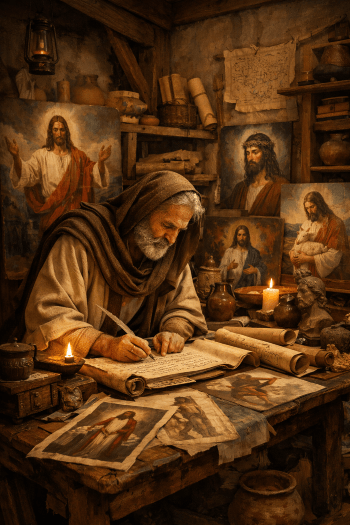
Character Is the Center of the Gospel
At its core, the gospel is concerned with who and what you are becoming, not merely what you profess or what outward actions you perform. Character is the sum of what you consistently choose—what you do, why you do it, and how you feel about it. It is not defined by your circumstances, your possessions, your reputation, your church affiliation, or priestly status. It is defined by your desires, thought processes, and decisions.
Every day, in every situation, you are becoming something other than what you were. Your choices are not isolated events; they are formative. They shape your transitory essence. Over time, they either bring you closer to God or move you further away from Him.
This is why discipleship cannot be reduced to rule-keeping or religious participation. The question is not merely whether you avoid certain sins or perform certain duties. The question is: Are you becoming the kind of person Christ is?
Living According to the Light You Have
Spiritual growth does not begin with perfect knowledge. It begins with honesty toward what you already know.
Each person has some sense—however limited—of what is right, what is true, what is best, and what Christ would do in their place. And although that understanding is incomplete and imperfect, it is not nothing. And it is enough to begin.
The critical dividing line is not between those who know everything and those who do not. It is between those who are willing to live up to what they sincerely believe is best and those who are not.
We all progress when we are faithful to the light we have. As we do so, our understanding increases. More is revealed. Greater clarity comes. But that additional light is not given arbitrarily—it is given in response to integrity. As we refuse to live what we already know, we cut ourselves off from further growth.
This is the pattern: Light received. Light lived. Greater light given.
The Nature of Repentance
Repentance is often misunderstood. It is not merely feeling bad about sin, nor is it a vague commitment to “try harder.” It is not just remorse, confession, and realignment when “serious sin” is committed. It is a real turning point—a decision of the will to align oneself with what one knows to be right.
But this must be understood correctly.
Repentance is decisive in direction, but it is not robotic in execution. Human beings are not machines. We are limited in perception, inconsistent under pressure, and often divided within ourselves. We do not perfectly perceive or apply truth in every moment. Anyone who has lived long enough knows this.
So repentance cannot mean flawless, moment-by-moment execution of everything one has ever understood. That is neither realistic nor scriptural.
Rather, repentance means this:
You stop justifying what you know is wrong and begin orienting your life in the most meaningful ways you know how, toward what you understand to be right.
You choose a life of humble, meek, honest, and faithful submissiveness to Christ. You stop defending sin. You stop negotiating and compromising with what you know is wrong. You become willing to be corrected, willing to improve, and willing to move forward—even if your execution is imperfect and unintentionally sloppy along the way.
That distinction matters. Without it, repentance becomes either meaningless or unachievable.
Salvation as Transformation
Salvation is not merely a future event. It is not simply being admitted into heaven while remaining fundamentally unchanged. It is deliverance—from sin, from disorder, from the internal contradictions that make a person unstable and unfit for the presence of God.
There is a difference between resurrection and salvation. All will be raised. But nobody will be miraculously transformed into something better than what they already were. Only those who have already chosen deliberate repentance, faith in Christ, and transformation into the image and character of Christ will be saved. This is because salvation is qualified by transformation made possible by faith and repentance.
True salvation requires becoming the kind of being that can actually harmonize with truth and endure the divine light and presence of Christ by learning to live in alignment with the love and truth God reveals. It is not a rescue from adverse consequences—it is a transformation from being unholy into the divine.
Hell, in this sense, is not merely a distant punishment. It is the condition of being unable to live in harmony with what is good, true, and right. It is internal disorder confronted and exposed.
Heaven, by contrast, is not just a location. It is a condition of alignment—a state in which a person’s thoughts, desires, and actions are increasingly unified with God’s.
Power Flows From Character
God’s power is not arbitrary. It is not detached from who He is or what He is. It flows from His character—His perfect alignment with truth, justice, mercy, wisdom, and love.
This has serious implications.
You cannot meaningfully possess divine power without becoming like the one who wields it. Power without divine character corrupts. Authority without alignment destroys. This is why God does not distribute power indiscriminately. It must be matched with the capacity to use it rightly. God’s power can only be paired with merit.
Many seek outcomes, blessings, influence, protection, and shortcuts to salvation, without seeking the character required to merit the blessings and privileges God desires to bestow. That is backward. The order is clear:
Become right → then act with power.
Christ as the Pattern
Jesus Christ did not come merely to be admired. He came to be followed and emulated.
His life is the pattern. Not in outward form, but in inward reality. He showed what it looks like to live in complete alignment with God—to act, think, speak, and respond in every situation according to eternal principles of goodness and truth. He demonstrated how to face suffering, temptation, opposition, and responsibility without deviating from what is right or what is best.
To follow Christ is not simply to believe in Him. It is to study Him, understand Him, and increasingly act as He would in your place.
That is a lifelong pursuit. It requires humility, correction, endurance, and continual recalibration. But it is the only path that leads upward to where and how God dwells.
Justification and Sanctification
Two essential concepts help clarify this process.
Justification is the point at which a person becomes functionally reconciled to the truth they already understand. It is when they stop resisting what they know to be right and choose alignment instead. It brings a measure of peace, because the internal conflict between belief and behavior begins to be resolved.
Sanctification is what follows. It is the ongoing process of improvement and growth—learning more, seeing more clearly, and becoming more refined over time. It is not static. It is progressive.
The key point is this: You cannot advance in sanctification while resisting what you already know or believe is best. Growth requires integrity at every stage.
Conclusion
The gospel is not a system designed to make people feel better about remaining the same. It is a path that leads to real improvement, increased goodness, and better righteousness.
It calls for honesty. It calls for repentance. It calls for transformation and endurance.
But it also offers something that shallow religion cannot provide: a way to become whole, stable, and aligned with what is ultimately real and good. This is the path to increased peace, happiness, and joy.
The question is not whether you claim Christ as your Savior. The question is whether you are becoming like Him.
Because in the end, that is what the gospel is for.
 GREATER LIGHT AND TRUTH
Leave a comment