11/11/2025
Introduction
There is a lot of intense meaning packed into this four-word phrase: Be hard to kill. Within it lies an entire philosophy of life and mode of being that speaks volumes. It expresses, in simplicity, a mindset that every man and woman of God should strive to maintain. It is not about violence or aggression; it is about resilience—mental, emotional, physical, and spiritual. It is about being the kind of warrior that hell itself cannot vanquish.
[If you are reading this via the subscription email, please click here to visit this post on my website to help out my website stats.]
To be hard to kill is to cultivate a strength of will that endures and conquers, even in the face of overwhelming opposition. When all the forces of nature, evil, and chaos combine against you, when hell itself opens the black maw of death to envelop you and swallow you whole, you must, nonetheless, be able and determined to stand, ready to face hell’s fury.
You must be able and willing to stand when others fall, fail, or abandon you. You must cultivate the power to persevere when others can’t or won’t. To be hard to kill means building the kind of inner fortitude that cannot be conquered by pain, betrayal, or fear. Life will break the weak, but it cannot break those who have become filled with the Spirit of God. As the Apostle Paul declared, “We are troubled on every side, yet not distressed; we are perplexed, but not in despair; persecuted, but not forsaken; cast down, but not destroyed.”[1]
More than anything else, to be hard to kill is a mindset, a way of thinking. It is an economy of thought, heart, and will. It is hearing and believing the Spirit of God that whispers to your soul, “I have given you everything you need. Now rise and shine, “fair as the moon, clear as the sun, and terrible as an army with banners!”[2]
To be hard to kill is entirely a matter of faith. It is doing everything you know you should do, in truth and righteousness, enduring to the end, never giving up, and in so doing relying on the Lord in every way, having done everything you can do. Those who have faith in Christ possess this confidence and hope. For such as these, they are not just hard to kill, they are impossible to kill, unless the Lord requires their death as a final testimony against the wicked.
This is the economy of God for those who have faith in Him. Those who adopt the purposes of Christ—who are His servants, His sons and daughters—these are they of the household of faith who are under His protection, who by law merit His support, who have His promise of every blessing they may stand in need of. Such as these are, indeed, very hard to kill.
When the tides of life rise and the floods come sweeping in to carry you away, the one who is hard to kill still comes up smiling, treading water, and living to fight another day, even if he must do so alone. With God at your side, how can it be otherwise?
To be Alive in Christ as a Servant of Light
To be alive in Christ means that you possess His thoughts, feelings, and moral energy. You are a swift sword in the fight for truth and light because you are imbued with His light. You are a servant of Light—an extension of His majesty and power.
As a servant of Light, you will find that others will be limited in how closely they can come near you. They will only tolerate you in limited amounts. You will find you must meter and limit what you share with others, being mindful of what they can realistically receive from you at any given time.
And so, as I have written before, a righteous man (or woman) must be willing and able to stand alone. So often, this will be a central aspect of your test and circumstance. You will be like a king or queen in the land of the dead—like Aragorn walking the paths of the dead.[3]
Dead men do not stand—at least, not with the strength and potency that living men do. These are they who appear to be living, but they are not. They are walking zombies. They appear to be living, breathing, thinking people, but they are not. They are puppets, slaves, and sycophants of the institutions that dominate them. They are not really alive; they are brain-dead by their own choosing.
Those who reject the light of Christ are correspondingly darkened within. As they reject the light that would enlighten and enliven them, by their choices and actions, they find themselves increasingly unprepared for the challenges that face them. Those who find themselves unprepared, lacking strength, stability, practical knowledge, or strong characters—such as these die easily. This is undesirable.
To be hard to kill means you are mentally awake and morally straight, as the BSA Scout Oath says we should be. To be hard to kill requires honesty, attention to detail, critical thinking, and constructive criticism directed at everything and anything. And ultimately, it requires an iron will, ceaseless self-discipline, and a determination to work both hard and smart.
Those who are truly alive and who are hard to kill, stand firm in truth and righteousness even when the whole world mocks them.
Those who are hard to kill follow the example of Jesus, who stood alone before Pilate, before the wicked priests, and before the mob. He was scourged, condemned, and crucified. Yet, in that supreme hour of agony and torment, His will remained unbroken. He yielded His life only when His mission was complete, saying, “It is finished.”[4] Jesus was not killed; He gave His life willingly—in the ultimate expression of love, truth, and divine masculinity.
Life can be insanely difficult. The world is full of evil and conspiring men who seek to own you, use you, and crush you. “Behold, verily, thus saith the Lord unto you: In consequence of evils and designs which do and will exist in the hearts of conspiring men in the last days, I have warned you, and forewarn you, by giving unto you [these words] of wisdom by revelation—”[5]
Men such as these combine and conspire, exercising power and authority, not just openly, but often in quiet and subtle ways that deceive, subvert, slowly weaken, and demoralize in ways that are hardly even noticeable. Hence, the imperative ability we must develop to discern good from evil, to divide the light from the darkness, and follow the light, as children of light, although it is night.
The Apostle Paul said it well:
“For we wrestle not against flesh and blood, but against principalities, against powers, against the rulers of the darkness of this world, against spiritual wickedness in high places.
“Wherefore take unto you the whole armor of God, that ye may be able to withstand in the evil day, and having done all, to stand, stand therefore, having your loins girt about with truth, and having on the breastplate of righteousness; and your feet shod with the preparation of the gospel of peace.
“And above all, taking the shield of faith, wherewith ye shall be able to quench all the fiery darts of the wicked. And take the helmet of salvation, and the sword of the Spirit, which is the word of God—Praying always with all prayer and supplication in the Spirit, and watching thereunto with all perseverance and supplication for all saints.”[6]
Taking Responsibility
As a husband and father, I have many who depend on me. Therefore, I must preside, provide, protect, and persevere in truth and righteousness. I cannot afford to be weak, sickly, or emotionally unstable. I cannot afford to be unprepared in any aspect: physically, mentally, spiritually, or emotionally. I must be an iron man—not in the Marvel sense, but in the ancient and eternal one.
The Lord told Jeremiah, “Today I am making you like a strong city that nobody can break into. You will be like an iron post and like a solid bronze wall. You will stand strong against the kings of Judah, their government bosses, their religious leaders, and all their people.”[7] That is what every man must become—a fortified tower that stands unshaken against corruption, the forces of evil, and destruction.
True strength begins in the mind. If you are mentally undisciplined, you will be emotionally unstable, physically careless, and spiritually adrift. Therefore, to be hard to kill is to be anchored in truth, strengthened by courage, and empowered by love and determination. It is to be governed by principles, not passions; by conscience, not convenience. It means cultivating high standards in matters of health, endurance, and moral discipline—because the battle for truth and righteousness demands it.
Be Prepared for the Storm
To be hard to kill also means to be prepared to live. The righteous man or woman recognizes that faith without wisdom is arrogant presumption, and belief without correlative action is folly. God commands His people to be both faithful and prudent by opening their eyes to the approaching storm.
Scripture repeatedly warns that perilous times will come. Famine, pestilence, war, and tyranny have been a part of every age, and these last days are prophesied to be worse than ever before. To live wisely, therefore, is to prepare for adversity of the highest order. This is not paranoia; it is prudence.
As Proverbs declares, “A prudent man foreseeth the evil, and hideth himself: but the simple pass on, and are punished.”[8]
When natural disaster strikes, when the economy collapses, or when governments and empires fall—as they always do—the unprepared perish first. The wise, however, are more likely to endure. They are not merely lucky; they are diligent, disciplined, and self-reliant.
Physical preparedness is not optional for those who take seriously their stewardship before God. If you are a husband, father, or protector of any kind, it is your moral responsibility to safeguard those entrusted to your care. To provide food, water, shelter, and defense is not a sign of fear or faithlessness, but of wisdom and faithfulness.
The Constitution affirms that being well-armed is the right of a free people, but even more than that, it is a moral imperative for those who would preserve goodness against the ever-increasing onslaught of evil. The man who refuses to defend his family, his neighbor, or his freedom is not peaceable—he is negligent. Peace cannot be preserved by weakness. Evil yields only to strength and virtue. So, get your guns and know how to use them.
Likewise, the man who fails to provide for his household, whether through idleness or carelessness, denies the very essence of discipleship. Paul declared, “If any provide not for his own, and especially for those of his own house, he hath denied the faith, and is worse than an infidel.”[9]
A wise household maintains food storage, water reserves, and the means to sustain life when systems fail. In times of famine or economic collapse, those who have prepared will not be easily subdued or destroyed. They will have the freedom to act with power and charity rather than desperation.
In an age where an EMP attack, nuclear strike, or foreign invasion is not just unthinkable but increasingly probable, the modern believer must not rely on blind optimism. Be trained, be equipped, be healthy, and be capable. Learn to grow food, purify water, and maintain sufficient power when the grid dies. Learn the art of defense, the value of fitness, and the wisdom of discipline. These are not worldly obsessions or the unbelieving reliance on the arm of the flesh; they are sacred and indispensable forms of stewardship.
And yet, even the best-laid preparations can vanish in a single day. Flood, fire, theft, or war can wipe away all material security in an instant. Thus, while physical preparation is essential as a matter of stewardship, it is not sufficient in itself. The truly hard to kill man or woman must also be spiritually, mentally, and emotionally fortified.
If all that you own were stripped away, could you still stand? Could you still lead, still provide hope, still pray with faith, still endure? The man of God must be prepared not only to survive, but to prevail—to lead others through the ashes when every outward provision has failed, trusting that God will provide everything you need according to His divine plan.
That is why faith, virtue, wisdom, and courage are the most vital reserves. These cannot be confiscated. They cannot be burned, stolen, or lost. They are the unalienable traits of righteousness.
Physical strength can be overcome; mental focus can falter; emotions can be broken. But the spirit, when armed with truth and righteousness, is indestructible. Jesus said, “Fear not them which kill the body, but are not able to kill the soul.”[10] When your heart and mind are aligned with God’s, you become unconquerable.
The truly prepared man is an indomitable pillar in a collapsing world. He is strong not merely because he has prepared physically, but because he has cultivated strength of character. His mind is calm when others panic. His body is capable when others faint. His faith is firm when others despair.
“But my disciples shall stand in holy places, and shall not be moved; but among the wicked, men shall lift up their voices and curse God and die.”[11]
To be hard to kill is to be both ready and righteous—to see danger coming and meet it with courage, to lose everything and still not lose oneself.
Prepare your home. Arm your hands. Strengthen your body. But most of all—fortify your soul.
For the day will come when all earthly structures are shaken, and only those anchored in truth will stand.
The Parable of the Ten Virgins
The parable of the Ten Virgins perfectly demonstrates what it means to be hard to kill. In that midnight drama, five were wise and five were foolish. All carried lamps, but only the wise carried oil in reserve. When the cry came, “Behold, the Bridegroom cometh!” the wise rose and trimmed their lamps, while the foolish found their light had gone out. They begged for oil, but it could not be borrowed. And when they went to buy, the Bridegroom came, and the door was shut.
The symbolism is profound. The oil represents spiritual preparedness—faith, virtue, knowledge, and inner light accumulated through obedience and endurance. The oil also represents the results of faith in action—the fruits of character development, skills enrichment, and physical improvements. By such things, one’s lamp is found burning brightly, but only when fed by the oil of righteous living. The foolish virgins were not destroyed because of open rebellion, per se, but because they were unprepared, derelict in their faithfulness, empty, and dependent upon others for what only personal effort and devotion could secure.
Likewise, those who are hard to kill have their vessels filled with oil. They possess reserves of strength—mental, emotional, physical, and spiritual—that cannot be taken or given away. Their light endures when the world goes dark. They are the disciplined, watchful souls who have built inner fortitude long before the storm arrived. They have built their foundation on the rock of Christ, not on the shifting sands of sin that are washed away in the floods of life.
The foolish virgins mirror those who live superficially—who rely upon institutions, popular opinion, and outward religiosity to sustain them. They live in comfort until crisis comes, and then, when the test arrives, all too often they panic in the flood and are lost. Their lamps flicker and die in the dark of night because their faith was weak. They never bothered to save up and store their own oil; they never forged their own inner strength.
The wise, by contrast, are the spiritual warriors who live with foresight and discipline. They prepare for both temporal and spiritual adversity. Their oil comes from years of faith, prayer, repentance, obedience, and effort. When the midnight cry comes, they do not tremble—they rise. Their lamps still burn. Their faith still shines.
To be hard to kill is to live as one of the wise. It is to keep your lamp trimmed, your vessel full, and your soul anchored in Christ. It is to be self-reliant in righteousness, never complacent or dependent on the strength of others or the pleasing doctrine of institutions. It is to have cultivated the spiritual and moral resources that enable you to stand when others faint, to remain calm when others curse God and die.
The closed door in the parable represents the final separation between those who have faith in Christ unto repentance and those who do not. Once the moment of testing arrives, it is too late to gather oil or develop faith. The Bridegroom receives only those who have already proven their faithfulness.
Thus, the wise virgins and the hard-to-kill saints are one and the same: steadfast souls who have learned to live in readiness, to endure darkness as the children of light, and to meet the Bridegroom with lamps still burning bright.
Maximus Decimus Meridius: An Example of an Unconquerable Spirit
Few fictional characters embody the principle of being hard to kill more vividly than Maximus Decimus Meridius, the Roman general from Gladiator.[12] Though a man of warfare and empire, Maximus stands as a timeless archetype of moral fortitude, disciplined strength, and indomitable will.
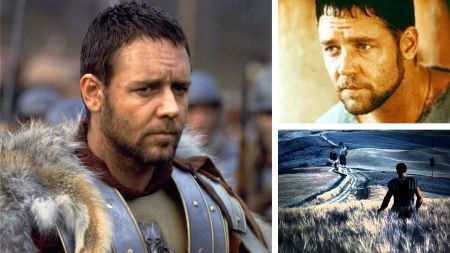
At the height of his honor, he commanded the Northern legions of Rome. He was loyal, courageous, and steadfast. Yet in a moment, his world collapsed. Betrayed by political corruption, his family murdered, and his title stripped from him, Maximus was left for dead—a man utterly broken in body and circumstance. But though his enemies could take his freedom and his wealth, they could not kill his spirit. He was a man of principle, a man bound to truth and duty beyond all evil fortunes.
This is the essence of being hard to kill. His body bled, his heart grieved, his life was dismantled and ruined—but his spirit remained unconquered.
When he rose from the dust as a slave, he did not descend into bitterness. He continued to live by the code of nobility and loyalty that had once made him great. Even in the blood-soaked arena, he remained noble, merciful, and restrained. He did not kill for sport, but for survival and justice. He never forgot who he was or what he stood for, even when the world did. That is divine resilience, the power to remain virtuous when virtue no longer seems to pay.
Christ taught, “In your patience possess ye your souls.”[13] Maximus lived that truth. He endured pain and humiliation with dignity, biding his time, seeking neither vengeance nor pity, but justice. When his moment came, he acted—not out of wrath, but out of moral necessity. He confronted tyranny not as a master of war, but as a servant of a higher law. In the end, when he faced death itself, he did so with peace, saying simply, “I will see you again, but not yet.”
There is a sacred masculinity in that composure. To be hard to kill is not merely to survive, but to transcend. It is to hold fast to honor and justice when dishonor and injustice rule the world; to preserve one’s integrity even when surrounded by corruption; to fight righteously even in defeat.
Like Maximus, every man who follows Christ must walk through betrayal, loss, and pain. But the righteous do not die easily, not because their flesh is invincible, but because their spirit is aligned with correct principles. Such men can be wounded, their bodies broken, and slain, yet their influence and goodness echo long after they have fallen. Their memory becomes a banner of light and courage for those who follow.
That is the legacy of the man who is hard to kill: his life is a symbol of greatness and goodness that echoes through time, long after he is dead.
Jesus Christ—The Ultimate Masculine Ideal
Maximus’s victory ended in death. But he showed us what a man can be when he refuses to despair and fights to the bitter end.
Jesus Christ, by contrast, demonstrated not just an invincible spirit, but a demonstration of righteousness and virtue uneclipsed by death. But where Maximus defied death, Christ overcame it. Where Maximus fought to avenge, Christ suffered to redeem. Jesus’ strength was not defiance, but humble and submissive obedience to His Father. His triumph was not through vengeance, but through love and forgiveness.
Christ embodies the ultimate archetype of manhood and masculinity. He does not merely restrain vengeance—He transcends it. Where Maximus’s sword ends life, Christ’s word gives life. Where Maximus stands in defiance of evil men, Christ kneels in obedience to the Father, drawing all men unto Him by His mercy and love. Hence, His strength is not defined by destruction, but by infinite love and endurance.
Christ did not destroy His enemies; He offered His life to them. He did not avenge Himself; He atoned for those who would have faith in Him. On the cross, where others had been overcome with pain and grief, Jesus cried, “Father, forgive them, for they know not what they do.”[14] That single request demonstrated His undying compassion, even when He was experiencing the greatest suffering a human can bear.
Jesus was not just hard to kill; He was impossible to kill; thus, his sacrifice was all the more notable because He gave His life willingly.
Conclusion
In the end, to be hard to kill is not simply to survive the trials of mortality, but to transcend them. It is to become one whose faith is fireproof, whose love endures through loneliness and betrayal, and whose soul remains steadfast even when one’s treasures and fortune fail. Such a person cannot truly be destroyed, because their life is defined by eternal law and divine purpose.
Their spirit has fused with truth itself, and truth cannot die. The world may strike them down, but heaven will raise them up. For in every age, God’s greatest warriors are those who conquer not by the sword, but by the unbreakable strength of their will, their courage, their integrity, and their undying faith in Christ. Of such, the Lord declared:
“And at that day, when I shall come in my glory, shall the parable be fulfilled which I spake concerning the ten virgins. For they that are wise and have received the truth, and have taken the Holy Spirit for their guide, and have not been deceived—verily I say unto you, they shall not be hewn down and cast into the fire, but shall abide the day.”[15]
[1] 2 Corinthians 4:8-9
[2] Song of Solomon 6:10
[3] The Return of the King, J.R.R. Tolkien
[4] John 19:30
[5] Doctrine and Covenants 89:4
[6] Ephesians 6:12 – 18
[7] Jeremiah 1:18, PEV
[8] Proverbs 22:3
[9] 1 Timothy 5:8
[10] Matthew 10:28
[11] Doctrine and Covenants 45:32
[12] Gladiator, 2000 film, staring Russell Crowe
[13] Luke 21:19
[14] Luke 23:34
[15] Doctrine and Covenants 45:56–57


 GREATER LIGHT AND TRUTH
Leave a comment