Most people believe they want truth, strength, and power—but only on terms that cost them little or nothing. This essay dismantles that illusion. It exposes the uncomfortable reality that power is not found in desire, belief, or good intentions, but in what you are willing to refuse, endure, and sacrifice in order to align with Christ. If you’ve ever wondered why real change feels out of reach—or why conviction so often collapses under pressure—this will show you exactly why, and what it actually takes to overcome.
I. The Value of Power
Power to do good is the operational capacity to translate conviction into a better reality. Without it, even the clearest moral vision remains merely theoretical.
Intentions, beliefs, and even sincere desires have no external effect unless they are coupled with the ability and willingness to act. Power, in this context, is the alignment of will, ingenuity, discipline, courage, and competence such that good can actually be executed.
A man may value truth, but without the courage to speak it and live it, the higher truth he values remains inert.
A man may value justice, but without the strength to uphold it, injustice prevails unchecked.
From the standpoint of outcomes, a good person who will not act is indistinguishable from a good person who does not exist.
II. Power Is the Difference Between Resistance and Compliance
In a world where competing forces—self-interest, corruption, fear, and coercion—are always present, the absence of power used for good results in default subjugation to evil.
If you lack the strength to resist pressure, you will eventually yield to it. If you lack the discipline to endure discomfort, you will abandon what is right when it becomes costly.
Power is what allows a person to hold the line when there is a price to be paid. Without it, values collapse under pressure.
III. Without Power, Goodness Becomes Passive
There is a form of “goodness” that is little more than harmlessness—non-threatening, agreeable, and inert. It avoids conflict, sacrifice, suffering, and ultimately responsibility.
But passive goodness does not protect, build, explain, or correct. It watches rather than intervenes.
Without power and without strength of will, an otherwise good man becomes a bystander—morally aware, perhaps even morally correct, but functionally irrelevant.
IV. Power Enables Stewardship
To be entrusted with anything of value—leadership, stewardship, or discipleship—requires the ability to preserve, protect, and advance it. That requires power.
A father without discipline cannot effectively lead his household.
A leader without courage cannot reliably guide people through conflict.
A believer without conviction will not uphold truth in the face of opposition.
Power is what turns responsibility into effective stewardship rather than a neglected obligation.
V. What Are We Without Power to Do Good?
We are constrained by our own weakness. We become spectators of outcomes we claim to oppose.
At best, we are well-meaning but ineffective.
At worst, we become complicit—because failure to act, when action is required, allows the opposite of good to prevail.
There is a hard truth here: If you cannot enact good, you cannot meaningfully claim it.
Becoming empowered to do good is not optional if one intends to actually become good by living with integrity. It is the difference between aspiration and embodiment.
Power—properly ordered—is the mechanism by which truth is upheld, justice is enforced, and righteousness is lived rather than merely admired.
VI. The True Measure of Power
Power is not measured by force; it is measured by what you are willing to refuse; it is measured by what you are willing to suffer and sacrifice in order to fulfill a higher purpose. It is measured by what you are willing to do and what you are not willing to do.
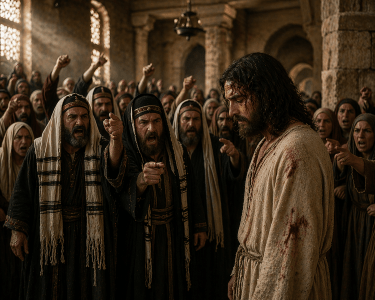
Power, in its truest and noblest form, is not domination; it is disciplined restraint. It is the capacity to reject what is easy, immediate, and gratifying in favor of what brings the best value, benefit, and outcome. A man who cannot refuse temptation is not powerful; he is enslaved by it. A woman who cannot endure suffering for truth is not free; rather, she is enslaved by her lust for comfort.
Christ Himself demonstrated this higher law of power—not by avoiding suffering, but by submitting to it in perfect obedience to the highest laws of heaven.
“He that findeth his life shall lose it: and he that loseth his life for my sake shall find it.” — Matthew 10:39
Power is revealed not in what you take, but in what you are willing to give up.
VII. The Cost We Refuse to Pay
“We are defeated because we are not willing to suffer in order to receive what we say we want.”
There is a brutal honesty in this truth. Most people claim to desire strength, clarity, peace, and divine power—but only under conditions that preserve their comfort. You may think you desire righteousness, but if you are not willing to suffer and sacrifice accordingly, then evidently your desire is not strong enough.
Every meaningful transformation exacts a cost. The problem is not that the path is hidden, it is that the price is unacceptable to the undisciplined heart and mind.
People abandon truth the moment it threatens their identity, relationships, habits, or desires for instant and continuous happiness and pleasure. And then they wonder why the results they say they want never materialize.
“For where your treasure is, there will your heart be also.” — Matthew 6:21
If comfort is your treasure, truth will always be sacrificed and subdued. If truth is your treasure, comfort becomes negotiable.
VIII. Flesh vs. Righteousness: An Irreconcilable Conflict
Try as you may, you cannot reconcile or harmonize the desires and corruption of the flesh with the laws and demands of righteousness. One must give way to the other. Attaining the power of God in your life always requires the willingness to endure great suffering and sacrifice.
There is no middle path where indulgence and holiness coexist in harmony. The flesh demands gratification, validation, and ease. Righteousness demands discipline, sacrifice, and submission to truth. These are not competing preferences; they are opposing kingdoms.
“For the flesh lusteth against the Spirit, and the Spirit against the flesh: and these are contrary the one to the other.” — Galatians 5:17
The attempt to merge them produces dishonesty and hypocrisy, not balance, not a comfortable medium, and certainly not any desirable results. The Power of God unto salvation only comes only when one side is decisively abandoned.
IX. Captured Servants and Hidden Corruption
The world is full of captured servants—people who claim to believe in Christ, and yet are kept under the bondage of sin because they are not willing to suffer the cost of truth in order to rise up to where truth reigns supreme. And so, they are shackled in the bonds of false ideologies, false claims, and half-truths.
Most people have no idea how extremely wicked they are. Because they are, in most ways, such very nice people, they are in complete denial of how delusional, dishonest, self-righteous, and foolish they are. This is largely the result of loving sin more than righteousness and of their ongoing cognitive dissonance.
This is the quiet tragedy of modern spirituality. Bondage rarely appears as overt rebellion—it presents itself as comfortable civility and moral self-satisfaction. People measure themselves against others rather than against truth, and in doing so, they justify what should be confronted.
They are not free; they are anesthetized. And because acknowledging their condition would require suffering, humility, repentance, and change, they instead choose denial.
“And why beholdest thou the mote that is in thy brother’s eye, but considerest not the beam that is in thine own eye?” — Matthew 7:3
Self-deception blended with self-righteousness is the strongest chain a person can wear.
X. Ignorance, False Belief, and the Strategy of Deception
We sin because we are ignorant and because we believe the wrong things. We too often believe in Satan’s remedies for unhappiness, and we disbelieve God’s remedies for unhappiness.
The devil exploits ignorance. God remedies ignorance with truth, and by the truth He sets us free.
Sin is not sustained by force—it is sustained by persuasion. The adversary does not need to compel behavior if he can shape belief. If a person believes that indulgence brings happiness, they will pursue it willingly, even as it corrodes and eventually destroys them.
“There is a way which seemeth right unto a man, but the end thereof are the ways of death.” — Proverbs 14:12
God’s countermeasure is truth. Not partial truth, not comforting distortions—but clear, corrective, often uncomfortable truth.
“And ye shall know the truth, and the truth shall make you free.” — John 8:32
Freedom is not granted through indulgence; it is granted through alignment with reality.
XI. The Pack: Strength Through Divine Association
The strength of the wolf is in the pack. As we are informed and empowered by truth, we are brought into direct association with Christ and holy angels. And together, there is great strength and power. But joining that pack requires the willingness to suffer and sacrifice everything else.
Spiritual strength is not merely individual—it is unified, collective, and relational. Alignment with truth brings alignment with Christ, and by extension, with divine power and order. There is protection, clarity, and strength in that association.
But access is not automatic. It requires full commitment. It requires consistent, faithful, reliable devotion to goodness and truth.
“If any man will come after me, let him deny himself, and take up his cross daily, and follow me.” — Luke 9:23
Half-measures do not produce divine power. Total alignment does.
But once you commit and follow through with that alignment, abundant blessings immediately flow. In fact, those who do this are often amazed by how quickly that higher spiritual power is experienced and manifest. If this is not the case, then rest assured it is you, not Him. There is more that needs to be corrected. And so, when this happens, the correct action is to pray for more correction, not to just give up. Giving up on God is an obvious manifestation of pride and an easy indication of why you did not receive the blessings you sought or were expecting in the first place.
XII. The Futility of the World’s Offerings
Trying to appease the desires and yearnings of the flesh is futile. What the world offers is never enough. The love that the world offers is never enough. It will never fully quench your thirst.
Synthetic happiness brings misery and despair. When you’re not on the dopamine hit, you dive. This is predictable.
Sin is like a hungry man who dreams he is eating, then awakens and finds he is still starving. Why spend money, energy, and effort on that which cannot satisfy
The world operates on cycles of stimulation and depletion. It promises satisfaction but delivers dependency. Each indulgence raises the threshold, requiring more for less fulfillment.
Isaiah described this condition with stark clarity:
“They are followers of ashes; their deluded minds have distracted them.” — Isaiah 44:20
To pursue satisfaction in what cannot satisfy is not merely unwise; it is self-destructive.
XVIII. Fulfillment Through Consecration, Not Consumption
Nobody gets to be loved in all the ways they want to be loved. And nobody gets to experience happiness in all the ways they want to experience happiness.
In fact, most of us get only a very small amount of what we want, and of very low quality most of the time too. That is reality.
And so, fulfillment in life is not about what we get or what we receive; it’s almost entirely about what we get to give. And as it turns out, we all have the option to give everything we have to God, for the accomplishment of His righteousness; and in turn, God promises to give all He has to those who ceaselessly do so.
We are to give everything we have to God primarily through serving others. That is the path to true joy and happiness and love in the best and truest sense possible.
This reframes the entire pursuit of happiness. Fulfillment is not found in maximizing intake, but in maximizing consecration. The scarcity of worldly satisfaction is not a flaw; it is a signal pointing toward a higher economy.
“It is more blessed to give than to receive.” — Acts 20:35
Those who give themselves fully to God do not end up diminished—they are expanded.
XIV. The Consequences of Rejecting Light
“When God gives us opportunities and access to greater light and truth that will prepare us for challenges ahead, and we reject it, we are on our own. Do not imagine that God will always protect and care for those who systematically reject his invitations to improve. He won’t. This life is the day of grace. Do not waste it.
Divine patience is real—but it is not indefinite. Light is given incrementally, and with it comes responsibility. To reject light is to reject protection, guidance, and growth.
“My Spirit shall not always strive with man.” — Genesis 6:3
This life is a defined window of opportunity. To squander it is to accept the consequences of turning you back on God.
But such suffering is entirely needless. God calls each of us to face Him, hear Him, and follow Him. As we do this, He leads us to where He eternally dwells—a place defined by love, truth, joy, and eternal burnings. Such is the extent of the joy, truth, and love that He offers. The glory of God is as a flaming fire!
XV. Power Through Jesus Christ
The sin and darkness of mortality can only be overcome and conquered by power, even the power of Jesus Christ, by learning His truth and following His way. We must be willing to suffer and sacrifice everything in order to follow Him, be armed with His power, conquer all sin and darkness, and thus be gathered into His loving arms.
There is no alternative path that leads to this outcome. Human willpower is insufficient to overcome the depth of sin and deception embedded in mortality. Transformation requires divine power—and that power is only accessed through full alignment with Christ.
“I can do all things through Christ who strengthens me.” — Philippians 4:13
But this power is not granted whimsically or casually. It requires total commitment, even the complete surrender of all competing allegiances.
Conclusion: The Cost That Develops and Defines Power
Power is not measured by force against force; it is measured by what you are willing to refuse. It is measured by what you are willing to suffer and sacrifice in order to fulfill a higher purpose. It is measured by what you are willing to do—and what you are not willing to do. That is the standard.
Power to overcome sin and darkness is not self-generated. It is not a discovery in isolation. It requires complete alignment with Jesus Christ—turning to Him, hearing Him, and being actively led by Him in all things. This is not passive belief. It is not an occasional effort. It is a deliberate, disciplined, continuous act of submission and response. It is chosen in real time, under real pressure, when competing voices and desires demand your subordination.
This kind of alignment does not happen by accident. It is built decision by decision—moment by moment, day by day—through what you refuse, what you accept, and what you are willing to endure. Each act of obedience strengthens clarity. Each compromise weakens it. Over time, these decisions do not merely influence your life—they define it.
There is no alternative path. No shortcut. No deferred obedience that somehow yields the same result. Either you align yourself with Christ and receive the power that comes from that alignment, or you remain subject to the forces you refuse to resist.
And when it is all stripped down—when comfort, image, and pretense are removed—one question remains:
What are you willing to refuse, no matter the cost—and what are you willing to suffer in order to remain true?
And what are you willing to do?

 GREATER LIGHT AND TRUTH
Leave a comment