There is a persistent misconception among modern Christians that devotion is primarily private—something internal, quiet, and personally meaningful, but not necessarily expressed. Scripture dismantles that notion entirely. True Christianity is not passive. It is declarative. It teaches, proclaims, warns, and invites.
The Apostle Paul declared: “…I am ready to preach the gospel to you… For I am not ashamed of the gospel of Christ; for it is the power of God unto salvation to everyone that believeth…” (Romans 1:15–16)
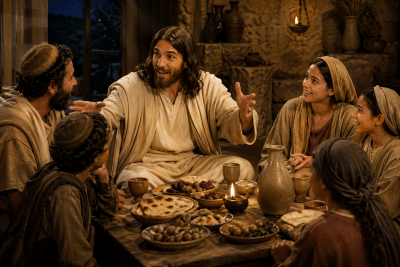
Paul does not present preaching as a specialized calling reserved for a professional class. He presents it as the natural output of belief. If one truly understands the Gospel as the power of God unto salvation, silence becomes irrational. Indifference becomes a contradiction.
To believe in Christ while withholding testimony of Him is to misunderstand both the nature of truth and the responsibility that comes with receiving it.
The Gospel Reveals Reality
The Gospel is the revelation of reality in its totality. It reveals truth, sin, redemption, righteousness, mercy, and judgment.
Paul taught: “For therein is the righteousness of God revealed from faith to faith… For the wrath of God is revealed from heaven against all ungodliness and unrighteousness…” (Romans 1:17–18)
The gospel clarifies what is right and condemns what is corrupt. It reveals not only the path to greater life and happiness, but the consequences of rejecting greater light and truth.
And how is that revelation made known?
“Because that which may be known of God is manifest in them; for God hath showed it unto them.” (Romans 1:19)
God does not rely solely on abstract revelation. He uses people—flawed, limited, imperfect people—to articulate truth. The message may pass through imperfect vessels, but the truth it carries is nonetheless vital and binding. And we are just as morally obligated to share the truth we are inspired to articulate as we are to receive what is made available, regardless of the mode or medium of transmission.
This is why silence is not neutrality. When truth is withheld, distortion, chaos, and darkness remain preeminently unchallenged and uncorrected. To refrain from teaching Christ is, in effect, to allow falsehood to define reality for others. In this, we are complicit with the darkness and evil we could have challenged and corrected.
Every Believer Is Appointed to Testify
Paul’s personal commission illustrates the scope and calling of discipleship in Christ:
“Whereunto I am appointed a preacher, and an apostle, and a teacher…” (2 Timothy 1:11)
While the titles may vary, the function does not. Every true disciple occupies, in some measure and fashion, these same roles: to preach (declare), to teach (clarify), and to witness (testify).
And this calling is not without cost:
“For the which cause I also suffer these things; nevertheless, I am not ashamed, for I know whom I have believed…” (2 Timothy 1:12)
The willingness to suffer for truth is not incidental—it is part of the test. It reveals whether belief is superficial or anchored. A Christianity that avoids friction with the world is almost certainly a Christianity that has diluted and corrupted its message.
To know Christ is to be persuaded of Him and to be defined by His character. Such as these will speak regardless of the consequences.
To Be Valiant in the Testimony of Jesus
In Doctrine and Covenants section 76, we read that those who inherit Celestial glory are those who receive the testimony of Jesus and who are valiant in the testimony of Jesus.
“They [who are exalted] are they who received the testimony of Jesus… and who overcome by faith…
[These] are they who are the church of the Firstborn.” (D&C 76:50–54)
Contrast this with those who inherit terrestrial glory. Of these, the scriptures declare:
“These are they who are not valiant in the testimony of Jesus; wherefore, they obtain not the crown…” (D&C 76:79)
This is not a minor deficiency. It is a decisive one.
To be “not valiant” is not to openly deny Christ—it is to fail to stand firmly, to shrink back, to remain silent when clarity and testimony are required. It is to possess truth but not defend it. To believe at some level, but not declare or clarify only what has been revealed to you.
Valiance implies action: boldness in speech, clarity in teaching, and consistency as a witness.
Valiance in the testimony of Jesus requires that we be “not ashamed of the gospel of Christ; for it is the power of God unto salvation to everyone that believeth…” (Romans 1:16)
Why This Matters
Every human being is continuously forming and reforming a worldview, whether consciously or unconsciously. That worldview determines how they interpret perception, morality, suffering, purpose, and reality. If that framework is distorted, everything built upon it will be likewise distorted and unreliable.
Christ is not simply a theological figure—He is the interpretive key to reality itself.
To teach and testify of Christ is to:
- Clarify truth from error
- Expose false narratives
- Anchor morality in something objective
- Reveal both the justice and mercy of God within the framework of divine law
When Christians fail to articulate this, the world does not remain neutral—it constructs alternative frameworks, often rooted in partial truths, emotional reasoning, or outright deception.
Thus, teaching and testifying of Christ is not merely evangelism—it is an essential act of restoration. It helps both the teacher and the hearer to see and comprehend more clearly.
Standing Alone
Truth has always had a narrowing effect. It exposes. It divides. It separates. It forces decisions.
To be valiant in teaching and testifying inevitably leads to moments of isolation. When you expose darkness and evil, and when you reveal greater light and truth, the natural man tends to shrink back in fear, shame, and uncertainty. As this takes place, social approval diminishes. Resistance increases. Misunderstanding becomes common. Shunning and rejection are to be expected.
But this is not an anomaly—it is a pattern. And it is a test.
Those who clearly articulate truth often find themselves standing apart, not because they seek isolation, but because clarity itself creates division between what is true and what is false.
The question is not whether one will stand alone at times, but whether one is willing to risk everything in standing for greater light and truth.
Conclusion: The Unavoidable Obligation
The structure of the Gospel leaves no room for passive discipleship.
- If it is the power of God unto salvation, it must be declared.
- If it reveals both righteousness and wickedness, it must be explained.
- If believers are called to be witnesses, they must testify.
- If eternal outcomes hinge on valiance, then silence carries dreadful consequences.
God has chosen to work through imperfect instruments—not because they are flawless, but because they are willing.
The responsibility is therefore unavoidable:
To teach.
To testify.
To clarify.
To warn.
To point, consistently and without apology, to Jesus Christ.
Anything less is not merely a missed opportunity—it is a failure to fully align with the very Gospel one claims to believe.


Leave a Reply