Chapter 2
September 16, 2026 – NEW Edition
The American filmmaker George Lucas reputedly said, “Your focus determines your reality.” What Lucas is referring to is your subjective, perceived reality — not your actual reality. He is suggesting that what we are not focused on simply does not seem real to us. Inversely, what we focus on seems not only very real, but imperative.
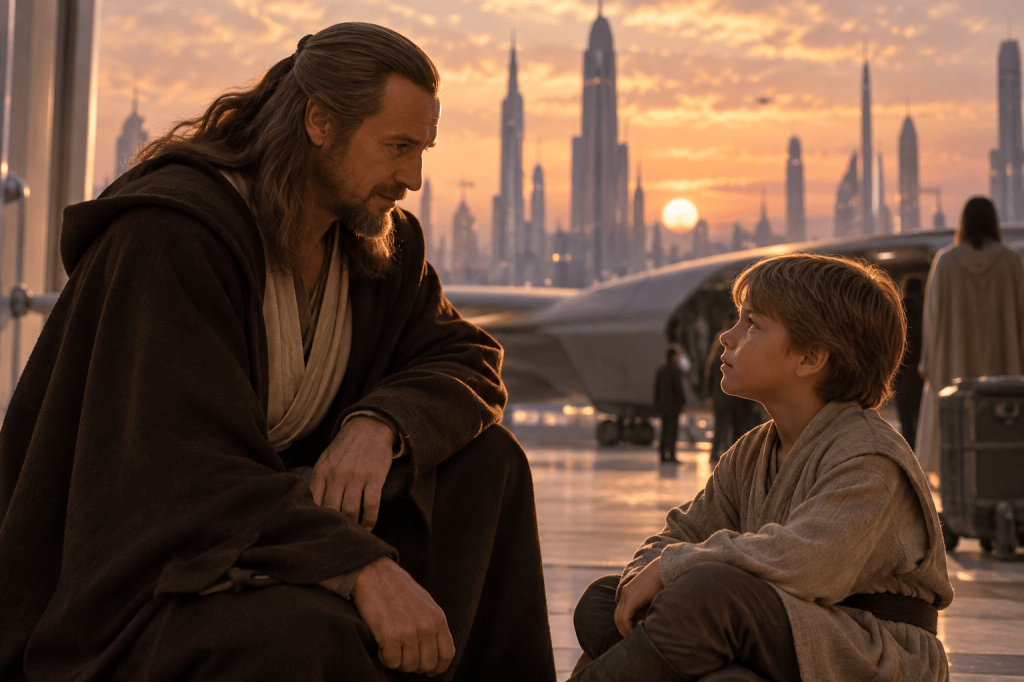
The human mind is incredibly limited and finite. Your mind is a stage. What you enact on that stage is, as far as your own awareness is concerned, the only consequential reality. For this reason, it is incredibly easy to fill our minds with truth, fantasy, and anything in between — but as far as your mind is concerned, it is all reality.
The problem is that a perceived reality built on emotion, self-interest, or fantasy can never produce a long-term, favorable, actual reality, which can only be built on honesty, faithfulness, virtue, and truth. So often people are dissatisfied with the fruits of their own actions when those actions were not honest, faithful, or virtuous. This has been true in the past, and it will continue to be true in the future.
Things As They Really Are
Scripture gives a remarkably concise definition of truth:
“And truth is knowledge of things as they are, and as they were, and as they are to come.” (D&C 93:24)
Jacob uses almost identical language: the Spirit “speaketh of things as they really are, and of things as they really will be” (Jacob 4:13).
That phrase, “things as they really are,” deserves serious contemplation, because it draws a sharp line between two categories that we constantly blur: reality, and our perception of it. We do not experience reality directly and perfectly. We experience our perception of reality, and the two are rarely the same, mostly because our perception is so very limited.
Perhaps one of the defining characteristics of God is that He sees reality without distortion and without limits of perception. For Him, every person, every motive, every cause and consequence is fully known without rationalizing, without comforting lies, without mistaking popularity for truth or emotion for revelation. We do not have that clarity by default. We have to incrementally earn it.
The Reality We Construct
Two people can live through essentially the same event and walk away with radically different accounts of what happened. One remembers actions and perceived motives that were partially imagined; another remembers fairness and mercy. One believes he was calculated and courageous; another sees recklessness in the same act.
Nephi, Laman, and Lemuel are striking illustrations of this. All three heard Lehi’s prophecies, left Jerusalem together, crossed the same wilderness, witnessed many of the same miracles, and crossed the same ocean. Yet Laman and Lemuel repeatedly interpreted their hardships as evidence that Lehi and Nephi were foolish, deceptive, and manipulative, while Nephi interpreted the very same hardships as reasons for gratitude and trust in God. The external events were identical. The internal realities were not, because, as Nephi explained, his brothers “knew not the dealings of that God who had created them” (1 Nephi 2:12). Their problem was not a lack of information. It was a lack of mental and emotional clarity, corrupted by what was happening inside them.
That should trouble us, because it means experiencing something does not guarantee understanding it. Seeing a miracle does not guarantee faith. Reading scripture does not guarantee greater comprehension of God. We can be absolutely certain and absolutely wrong.
Our perceptions are often filtered through personality, pride, emotion, loyalty, appetite, and desire. Sometimes we misread reality innocently, because our information is incomplete. Sometimes we misread it because our reasoning is poor. More dangerously, sometimes we misread it because the truth is inconvenient, and that is where self-deception begins. Self-deception is not simply believing something false; it is becoming emotionally invested in an interpretation because that interpretation protects something in us: our pride, our reputation, our need for security, our sense of innocence. Once we are sufficiently invested, contrary evidence starts to feel like a threat, and the question quietly shifts from what is true? to how do I defend what I already believe? That is a dangerous transition, and religion, education, and intelligence do not automatically prevent it. An intelligent person may simply become more sophisticated at defending what he already wants to believe.
Samuel the Lamanite accused the Nephites of exactly this: embracing any prophet who told them “Walk after the pride of your own hearts… and do whatsoever your heart desireth,” while rejecting anyone who confronts their sins (Helaman 13:27–28). Their standard for truth had quietly become whether the message is self-affirming, convenient, and supportive of all their currently held beliefs.
Reality Does Not Negotiate
If you want to achieve flight, then you must implement a force that exceeds the pull of gravity. You may choose to identify as Superman, but try jumping off your roof for a quick flight, and you will quickly discover how much wishful thinking can hurt.
Aviation holds many examples of this. A pilot’s convictions do not change the physics of flight. Aircraft weight matters. Fuel quantity matters. Airspeed matters. But if a pilot becomes convinced, however sincerely, that the fuel gauges are wrong and there is more fuel aboard than the gauges show, he may find out the hard way that all his wishful thinking could not alter the reality. Eventually, the engines will quit due to fuel starvation.
The same principle applies to other aspects of life. If I consistently spend more than I earn, my confidence that things will somehow work out does not repeal the laws of mathematics. If I mistreat people while telling myself I am simply defending truth, my vocabulary does not transform cruelty they perceive into righteousness. Calling resentment “discernment,” cowardice “prudence,” or selfishness “boundaries” does not change what those things actually are. Reality does not negotiate with vocabulary. Eventually, it presents the bill.
We live in a universe governed by eternal principles and laws which stipulate the conditions upon which specific outcomes must be achieved. Violation of those laws must inexorably forbid the outcomes they govern. In many cases, there is only one way to satisfy the law governing a given outcome. This is, in a very real sense, the science of God1 — necessarily relevant to man, and governing every sphere, every creature, and every molecule in existence.
In seeking to comprehend and apply the eternal truths, principles, and laws of God, we find that the details matter. Precision matters. Accuracy matters. Quality matters. Getting it right matters. The laws of nature operate independently of wishful thinking or feelings. We live in a cause-and-effect reality.
When it comes to flight path management, a single tiny misstep can be disastrous. Just a one-degree deviation may cause a craft to miss its target entirely, especially across the vast distances of the universe. Every inaccuracy may have far-reaching consequences, implications, and long-lasting effects. After all, we are not just talking about rocket science; we are talking about God-science, and the eternal consequences of every minute decision we make. Not to alarm anyone, but the reality is that every breath you take, every thought you think, every word you say, and every action you take has vast and irreversible eternal consequences.
Should we fear that? Yes. Should we be paralyzed by it? No. What we have been given instead is irresistible freedom: the opportunity for diverse expressions and outcomes of faith, and the possibility of infinite learning, expansion, elevation, and progression.
If you want to transcend the boundaries of your current predicament, if you want to ascend to the highest levels of creation, burst the canopy of the stars, and explore the uttermost corners of the cosmos, then you must learn, apply, and fulfill the laws that regulate such outcomes. The same is true on a smaller scale: if you want to live happily and prosper within this sphere, establish good civil government, or live up to the full measure of your existence here, then you must identify and satisfy the laws that govern those outcomes.
Eternal Reality
This becomes even more consequential if existence extends beyond mortality. If God exists, if consciousness survives death, if moral law is real, and if our character has eternal significance, then spiritual reality is every bit as objective as physical reality. The difference is only that physical consequences tend to arrive immediately, while spiritual ones are often delayed. Touch a hot stove, and the lesson is instant. Live selfishly, feed resentment, or practice dishonesty, and the consequences may take decades to fully unfold, and may even seem, for a time, to reward us; but a delayed consequence is still a consequence.
King Benjamin describes mortality as a process of becoming—putting off the natural man and yielding to the Spirit until we become “a saint through the atonement of Christ the Lord” (Mosiah 3:19). Every repeated choice shapes perception. Every act of honesty makes honesty easier; every rationalization makes the next rationalization easier. Eventually, our choices become our character. And character is the essence of individual moral reality.
Learning to See
Spiritual maturity is, in significant part, learning to see reality with progressively less distortion. We begin life seeing largely through ourselves. We see and perceive reality emotionally. But Christ invites us into something greater, something better. He invites us to correct those distortions by learning to see ourselves, other people, and God more nearly as they actually are.
The goal, therefore, is not to become increasingly certain that our perception is correct. Certainty itself can become another form of blindness. The goal is to become increasingly correctable—to view our perceptions honestly and humbly enough that truth and reason can correct them when they are wrong. Meekness is not intellectual weakness. It is the willingness to allow reality, revelation, and truth to dismantle the erroneous perceptions we have accumulated about ourselves and the world around us.
As our vision clears and our comprehension of reality deepens, we learn to appreciate and value what God appreciates and values. This gives us the incentive to modify our behavior and actions in ways that yield the best value, benefit, and outcomes.
This process requires meekness. It requires the willingness to receive chastening and correction with humility.
As we learn to see and comprehend reality more clearly, with the ability to anticipate cause and effect accurately, our capacity to exert faith with the intent to bring about the most favorable outcomes increases.
Eternal Principles and Laws
Learning to see and comprehend reality as God does requires us to learn the most essential principles and laws by which the universe is governed. God comprehends reality perfectly because He possesses perfect knowledge of the eternal principles and laws by which reality operates. Knowledge of these eternal principles and laws provides the basic building materials and tools required to build the tower upon which one must stand, enabling the view and comprehension of all things.
People are not deceived because they cannot reason. They are deceived because they lack the principles and established thought processes needed to reason logically and correctly. And because they often lack the honesty and virtue needed to see this through.
My purpose in writing these chapter-essays is to list, define, and explain these eternal truths—principles, laws, doctrines, and teachings that must be understood to see reality more clearly. By learning these things, we can all learn to be self-discerning, self-governed by truth, and personally connected to and aligned with God.
Learning to Focus on Christ
Learning to focus on Christ and his teachings gives clarity and focus to our perceived reality. Learning to focus on Christ corrects our perceived reality, making us more effective as would-be disciples of Christ.
The reality Christ sees is the only reality that truly matters, because it is entirely true.
Learning to focus on Christ and to have faith in Christ is what we are all about. Learning to do this is why we are here.
We exercise faith in Jesus Christ by believing Him: by learning who He is, how He thinks, how He judges, what He loves, how He loves, what He values, what He teaches, and what He commands—and then acting accordingly. As we do, the distance between our perceived reality and actual reality begins to decrease. We become more like Him because we increasingly see what He sees, value what He values, love what He loves, and choose what He would choose. Our minds become clearer. Our hearts become purer. And reality itself becomes increasingly beautiful because we are finally learning to see it as it really is.
Walking Toward What We Become
Imagine a man walking through the dark with a flashlight. The light does not create the ground beneath him, but it reveals where he is about to place his feet. His conscious attention works much the same way. What he repeatedly brings into view becomes easier to choose and act upon. If he keeps his mind on grievances, he will notice fresh reasons to resent. If he looks for people he can serve, truths he must face, and duties he can fulfill, those possibilities begin to shape his actions. Focus does not change reality by itself. It directs our choices within our reality.
There are powerful reasons to pray always, study the scriptures regularly, and remember God throughout the day. These practices bring the words of eternal life into the light of our conscious minds and hearts. They help us recognize what the Holy Spirit is revealing, holding before our eyes the kind of person we should want to become. As we learn to focus on Christ, we can train our thoughts, desires, words, and actions to emulate Him. Where the light of our conscious mind shines, our feet are more likely to follow.
By focusing on the Lord Jesus Christ, holding fast to what strengthens our faith in Him, and turning away from what distracts or leads us from Him, we bring our faith into focus. His teachings become more than truths we admire; they become the light by which we choose where to walk. As we follow that light, we train our thoughts, desires, words, and actions to emulate His.
Walking by the Light of Christ
When we walk by the light of Christ, we will more fully see the blessings of His way as real consequences of living in harmony with divine truth. Recognizing and accepting that reality changes what we want. The more fully persuaded we become that His way leads to a far better life filled with peace and happiness, the more reason we have to choose it—even when the immediate difficulty and sacrifice seems very hard. Over time, doing good becomes less a duty we force upon ourselves and more an expression of what we love and truly desire. Righteousness is not contrary to reason. Once we see reality more clearly, it is the most reasonable way to live


Leave a Reply