In the previous essay, We Are Defined by How We Love, I argued that taking upon ourselves the name of Christ means increasingly becoming like Him—until His character and even His image become recognizable in how we love and treat others. But that principle means very little if it applies only when loving is easy. The real test comes when we are frightened, angry, threatened, or surrounded by people telling us whom we should hate. Nowhere is that test more severe—or more revealing—than in times of war.
It is easy to love our enemies when we do not actually have any. War makes the commandment far more challenging.
Governments are inevitably prone to tell us who the enemy is, how dangerous they are, and often how we should feel about them and treat them. So, when this happens you need to already know who is your God, what principles you are governed by, and then act accordingly.
If government and institutions are your god, then you will worship and believe them. If Jesus is your God, you will take the Holy Spirit for your guide, you will discern the truth, and you will not be deceived.
“For they that are wise and have received the truth, and have taken the Holy Spirit for their guide, and have not been deceived—verily I say unto you, they shall not be hewn down and cast into the fire, but shall abide the day.” (D&C 45:57)
Long ago, the prophet Nephi also warned us when he said:
“Cursed is he that putteth his trust in man, or maketh flesh his arm, or shall hearken unto the precepts of men, save their precepts shall be given by the power of the Holy Ghost.” (2 Nephi 28:31)
He is warning against outsourcing our discernment to human authority. The problem is not that governments, churches, experts, institutions, or educated people can never tell the truth. The problem comes when their authority becomes the basis for believing what they say. Nephi’s exception is significant: listen to the precepts of men only insofar as they are confirmed by the power of the Holy Ghost.
The power of the Holy Ghost teaches reason, compassion, and wisdom, often by applying biblical messages to real life situations. As we harken to the Holy Ghost, we are empowered, enlightened, and are much less likely to be deceived.
Nephi contrasts this just a few verses earlier:
“Yea, wo be unto him that hearkeneth unto the precepts of men, and denieth the power of God, and the gift of the Holy Ghost!” (2 Nephi 28:26)
And earlier in the chapter he describes institutions that replace revelation with institutional learning, saying:
“And they shall contend one with another; and their priests shall contend one with another, and they shall teach with their learning, and deny the Holy Ghost, which giveth utterance.” (2 Nephi 28:4)
This last phrase is crucial. Nephi’s criticism isn’t simply that their information is incorrect. It is that human learning has displaced spiritual discernment through revelation as their epistemological authority—their method for determining what is true.
Nowhere is this lack of spiritual discernment more dangerous than in times of war. Governments do not merely ask citizens to support policies or military objectives; they inevitably construct narratives about who is righteous, who is wicked, who can be trusted, and who deserves our fear, hatred, or contempt. When we allow the state, the media, politicians, or even our church leaders to answer those moral questions for us, we have effectively made flesh our arm.
One easy red flag to detect is wartime rhetoric that teaches vindictiveness, retaliation, getting even, more war, more destruction, and more hate.
War rewards toughness, suspicion, tribal loyalty, and vindictiveness. Entire nations can become reduced to a single label: the enemy. But Jesus gives His disciples a radically different command: “Love your enemies, bless them that curse you, do good to them that hate you, and pray for them which despitefully use you, and persecute you” (Matthew 5:44). There is no wartime exception.
Government, therefore, should never be allowed to do our thinking for us or become the final authority over our conscience. History gives us little justification for granting political power that kind of trust.
Political scientist R. J. Rummel, in Death by Government, estimated that governments and political regimes were responsible for approximately 169 million deaths through what he called “democide” between 1900 and 1987—including genocide, political mass murder, massacres, and other intentional killing by governments. His work demonstrates an uncomfortable historical reality: government itself can become an extraordinary instrument of evil. Political authorities therefore possess no inherent moral right to determine whom we should love or hate. Their claims must always be measured against truth in evidence, conscience, and ultimately the teachings of Christ.
This becomes particularly important during war and political conflict, when propaganda, information warfare, and psychological operations are deliberately used to shape public perception. Governments have powerful incentives to simplify complicated conflicts into emotionally compelling narratives of us against them. Disciples of Christ must therefore be exceedingly careful not to become unthinking pawns of anyone’s propaganda. We should become suspicious whenever complicated human beings are reduced to caricatures, when entire nationalities or populations are portrayed as wicked, or when hatred and cruelty become confused with patriotism. Governments may identify political and military enemies, but they do not possess the authority or moral reliability to dictate what we should think or feel or to demonize entire nationalities.
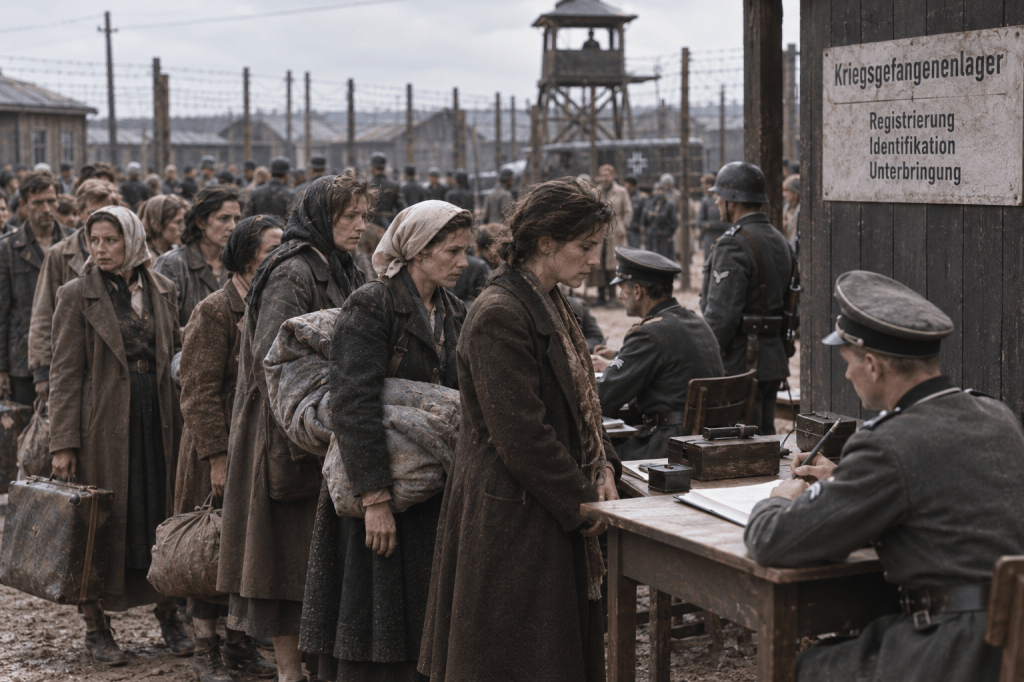
None of this means evil should not be resisted. Governments can become wicked. Armies often commit atrocities. Aggressors sometimes must be stopped, innocent people defended, and dangerous people restrained. But our ultimate enemy is not a nationality, ethnicity, race, religion, or population. Our enemy is evil itself—particularly the deliberate choice to dominate, enslave, exploit, torture, murder, deceive, or abuse other human beings. That evil can exist in an enemy government, but it can also exist in our own government. It can exist in an enemy soldier, but it can also take root within ourselves. Christianity therefore requires something considerably harder than simply choosing the correct side: we must oppose evil without overgeneralizing or becoming evil in the process.
Every truth is only true in correct context.
This distinction matters because the sins of a government do not automatically become the sins of its citizens. In most conflicts, only a fraction of the population is directly responsible for the decisions, aggression, and atrocities that produced the war. Most ordinary people on every side are doing much the same things we are: raising children, working, caring for their families, praying, surviving, and sincerely trying—however imperfectly and sometimes mistakenly—to do what they believe is right. They may have been deceived by propaganda. They may misunderstand us just as profoundly as we misunderstand them. But nationality itself does not make someone evil.
Recognizing this changes how we see the person on the other side. The enemy soldier may be a frightened conscript, a confused young man, or a father who sincerely believes he is defending his country. The refugee fleeing an enemy nation may be a mother desperately trying to save her children. Even a prisoner who fought against us remains a human being possessing inherent worth, deserving basic gestures of humanity. As we judge each case we must not be foolish or cruel. Prisoners may need to remain prisoners, borders may need to be defended, and genuine threats must be taken seriously. But security never requires cruelty, humiliation, hatred, or vengeance. We can restrain an enemy without ceasing to love him.
Perhaps this is one of the greatest tests of whether we have truly received the image of Christ in our countenances (Alma 5:14). Anyone can love his own people, but Jesus specifically commanded us to love those who oppose us. If government, propaganda, fear, anger, or tribal loyalty can determine whom we hate, then Christ does not yet fully govern our hearts. The refugee, the wounded enemy soldier, the grieving mother across the battlefield, and even the person who genuinely hates us remain people whom Christ commanded us to love, forgive, bless, and serve whenever possible. We are defined by who we love and how we love them—and nowhere is that definition tested more severely than in war.
This essay is published on the 25th anniversary of 9/11.
I did not plan this, but perhaps God did.


Leave a Reply